Tag:leadershipClear

A founder's greatest strength—personal competence—eventually becomes the company's biggest liability as it scales. To reach the next level of growth, you must evolve from an orchestrator of systems to a network node that distributes actual decision rights, not just repetitive tasks.

Manu Sharma, Wildfire Labs
2w ago

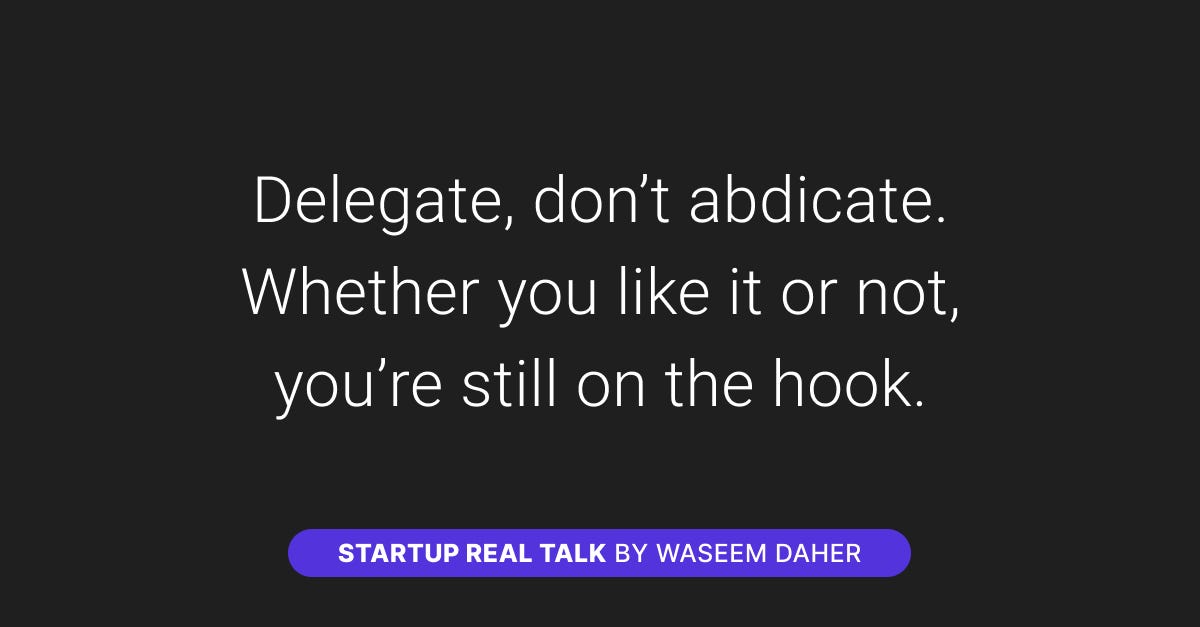
There is a big difference between delegating responsibility and abdicating responsibility. While you want to give new hires ownership and agency, you are still ultimately accountable for everything the business does; you must stay close enough to the details to understand if the work is succeeding or if you need to intervene.

3w ago
linkedin.com

Decision-making is an under appreciated skill for founders. There's so much chatter about how to build, how to launch, how to sell, how to test… All of these activities generate information, but there are few tools for using what you learn to make good decisions about what to do next. Which is crazy, because that's the whole point of a startup! Do something, learn something, adjust and repeat. We have created two powerful tools for decision making: Note-and-Vote and Magic Lenses. These are straightforward methods for making good, opinionated, fast decisions alone or with a team. We have used them hundreds of times with startups and for our own internal decisions at Character Capital. They are based on our observations from work with 300+ teams, and on behavioral research about decision-making.

3mo ago

"He had two settings: charming Brit and asshole Brit. And he quickly moved into the latter category," a former Post staffer tells me. "He was just like, 'Fuck the feelings of the newsroom,'" an executive at a rival media organization says. "He was just going to plow through and get his job done for his boss."

3mo ago

Underscored — save the words that stop you in your tracks.

Start saving quotes →