
underscored

@underscored

11 clips · 1 follower

Follow
Tag:artificial-intelligenceClear

We tend to conflate power-seeking AI and superintelligent (in science and tech) AI. I'm not denying that AI can be power-seeking. Whatever skills and drives Donald Trump has could be embodied in a digital mind. I'm simply pointing out that the way we're currently making AI systems smarter (training them to be really good coders, thought partners, and general coworkers) is not that strongly correlated with power.

Dwarkesh Patel
2d ago

The key to understanding and analyzing tech has been appreciating the implications of zero marginal costs, which govern the economics of everything from chips to software to services. AI services generally fall under the same rubric — fixed costs in terms of data centers and chips matter more than marginal costs (mostly electricity) — but the worsening shortage in compute means it is opportunity costs that matter more than ever.

1w ago

This wasn't just a podcast about Apple, but about how tech has changed over the last fifty years, and why AI makes even the most reliable narrators of history increasingly uncertain about the future.

3w ago

This Generative AI momentum is creating a lot of optimism around the potential of one person companies or solopreneurs using agentic AI. If Agentic AI works out, small businesses might have a new array of powerful tools as well.

4w ago

He tries to hear out every faction: first the AI existential risk people, then the AI optimists and accelerationists like "Beff Jezos," then the "stochastic parrot" / "current harms" people like Emily Bender and Timnit Gebru, and finally the AI company CEOs (Altman, Amodei, and Hassabis were the three who agreed to be interviewed), with Yuval Noah Harari showing up from time to time to insert deepities.

4w ago

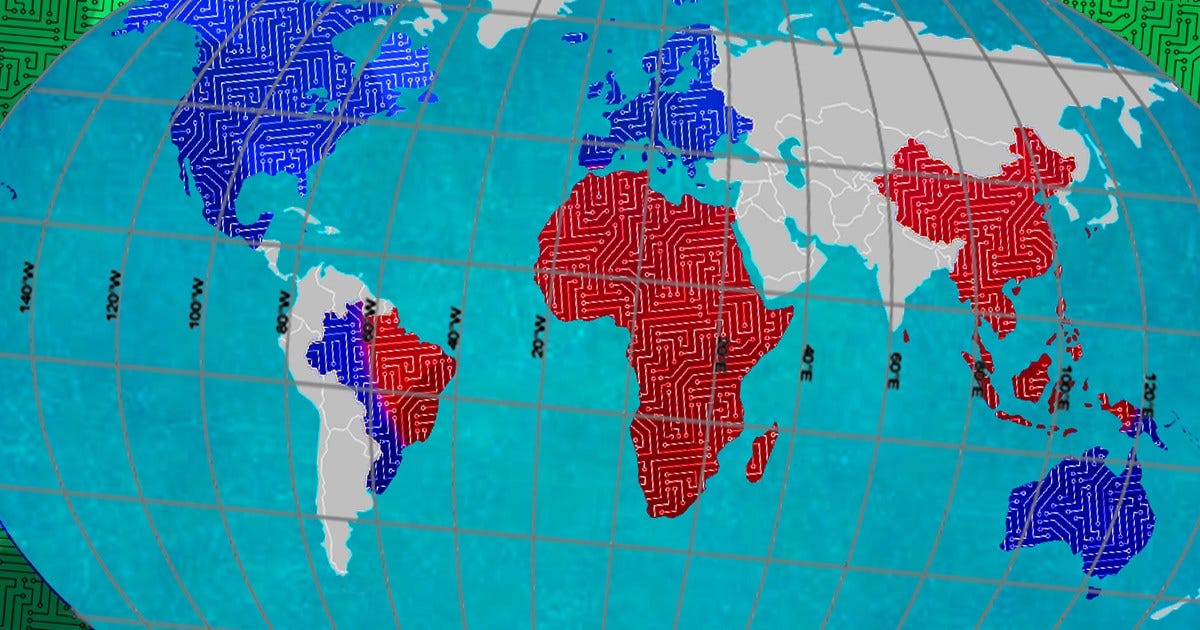
For much of the past decade, the rise of artificial intelligence appeared to be governed by inputs that diffuse quickly. Advances in architectures, algorithms, training techniques, and data practices spread rapidly through academic papers, open-source code, and global talent markets. Because these inputs were highly replicable and only weakly tied to geography, it was natural to assume that AI capability would spread broadly across countries and firms. That assumption no longer matches reality.

1mo ago

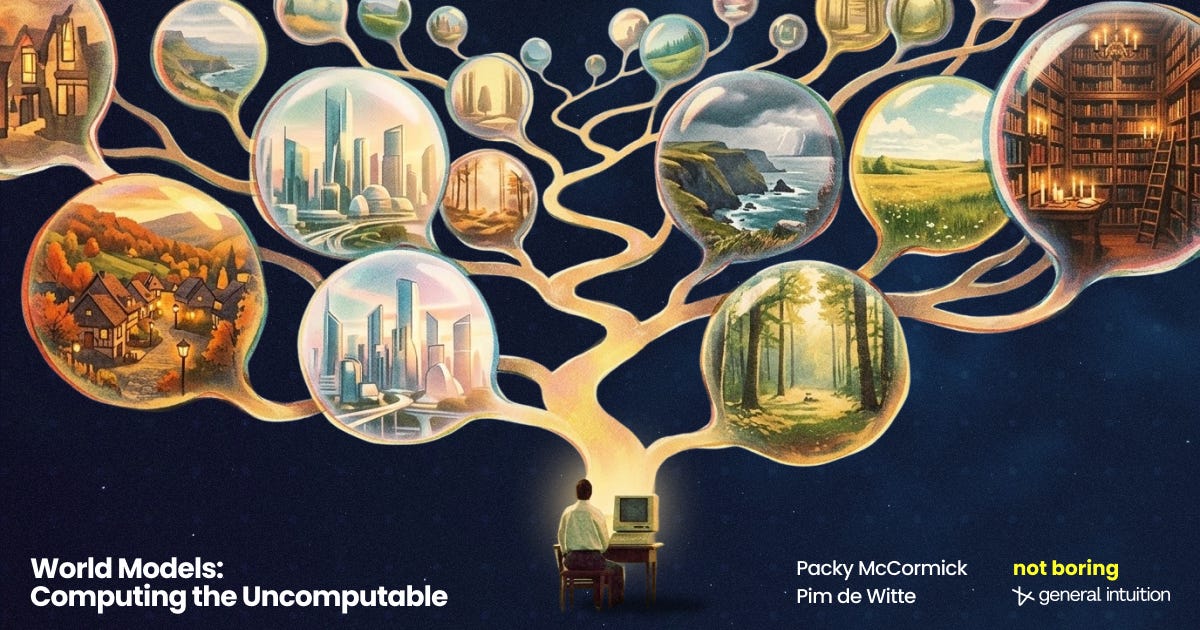
For computers, actions are a cheat code around the costs of simulation. If human brains are much more efficient than best-in-class LLMs, then we can get all of that computation practically for free by observing how humans respond to the countless variables in their environments. This gives us a way to do non-deterministic computing efficiently and create simulations that shouldn't be possible under traditional compute constraints.

1mo ago

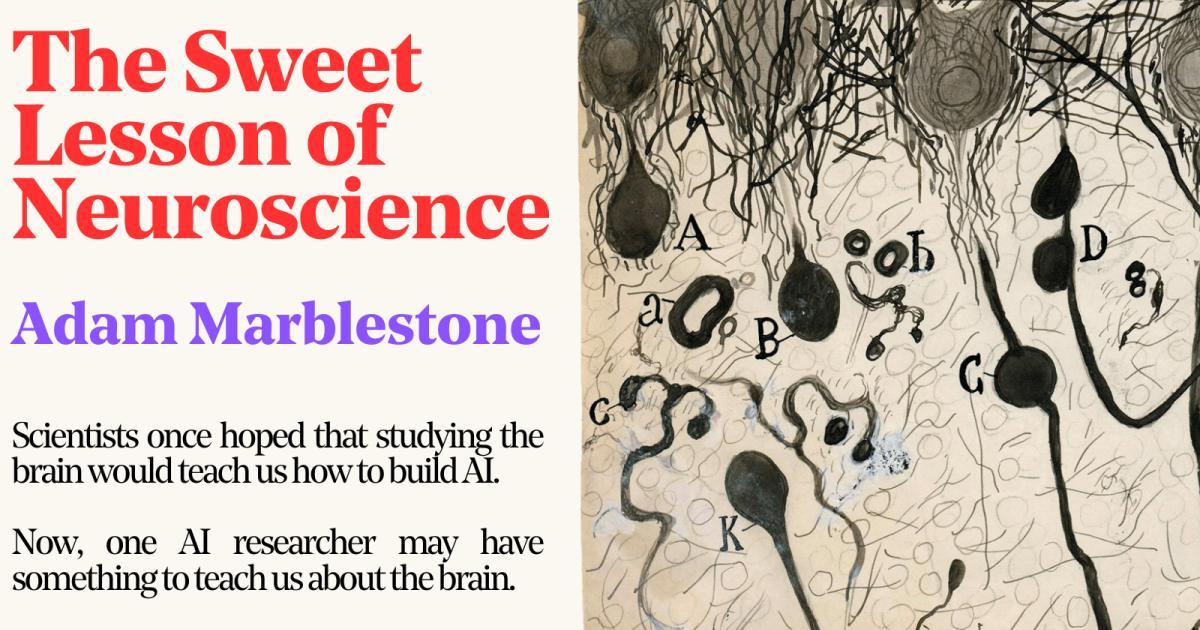
Scientists once hoped that studying the brain would teach us how to build AI. Now, one AI researcher may have something to teach us about the brain.

1mo ago

Underscored — save the words that stop you in your tracks.

Start saving quotes →