underscored

@underscored

50 clips · 1 follower

Follow
Tag:entrepreneurshipClear

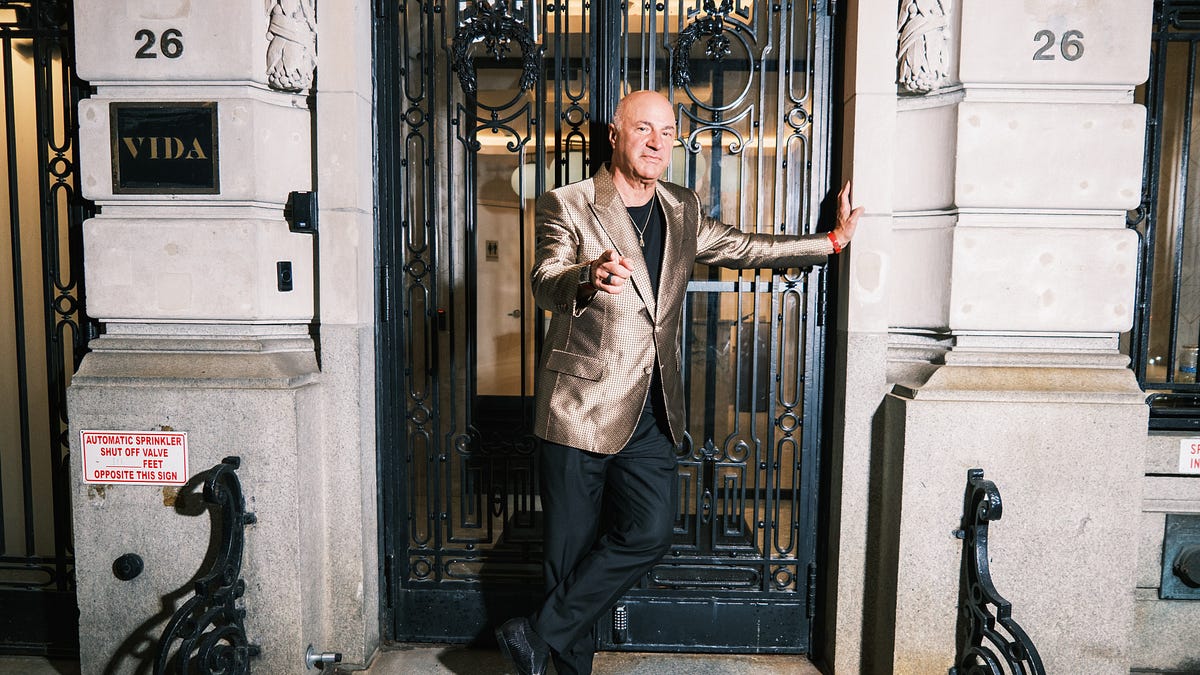
In many accelerators, startups spend the program looking to ship and validate a minimum viable product, or MVP, readying it to a point to pitch to investors by demo day. In Elbow Grease, founders mostly knew how to use the various vibe-coding and agentic tools already in the market from companies like Anthropic and OpenAI; they could ship a product in a matter of days. Programming and workshops instead oriented around recruiting, sales and other aspects of company building.

Alex Konrad
1d ago
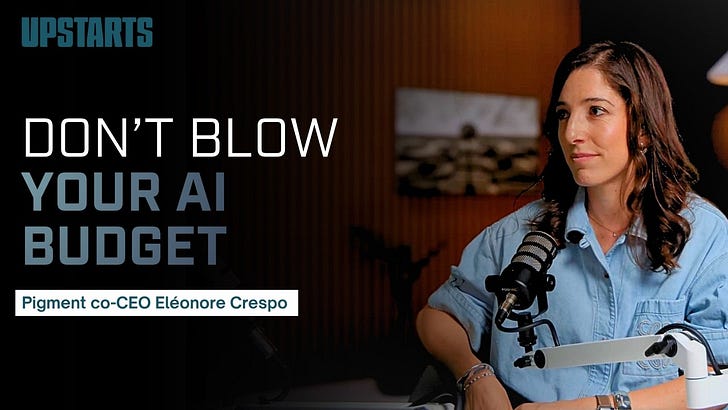
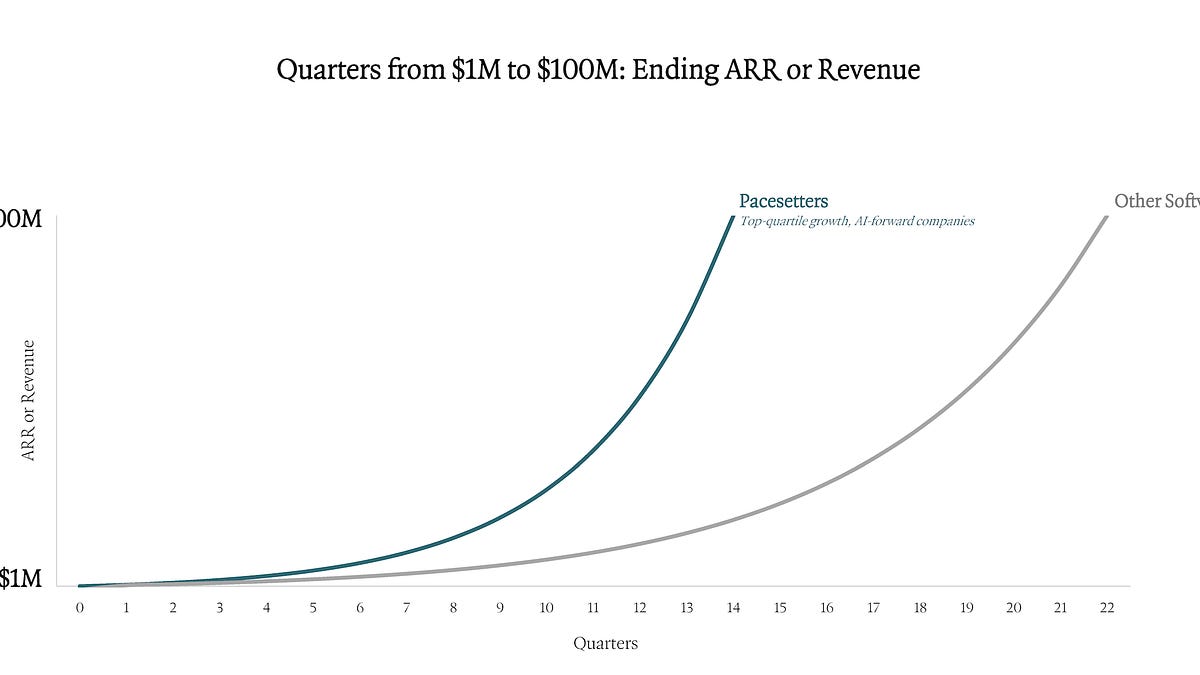
Inside the companies pulling ahead — Anthropic, Cursor, Cognition, Replit, and a small number of others — a different unit shape had emerged: five-to-ten people, direct CEO reporting, broad decision rights, hybrid roles, communication overhead at roughly one-tenth of a comparably-staffed conventional product unit.

1d ago
The promise of AI is that it will turn businesses into software so that they can evolve over millions of tiny iterations. Beautiful, ideal, complex things can only emerge as the result of tremendous trial and error over time. You cannot build perfection, only discover it.

6d ago

The worst websites often belong to the best manufacturers. Heritage brands that have been making quality products for decades frequently have terrible websites that are hard to navigate. This puts them at a disadvantage compared with Amazon or well-funded DTC brands. AI levels the playing field by making it just as easy to shop from a 100-year-old manufacturer with a clunky website as from Amazon.

1w ago

Few – if any – startups in Silicon Valley history have grown as big as Notion, or for as long, without some semblance of a board. But by virtue of a quirk of its own fundraising history and an intellectual internal leadership style, it's the position Notion found itself in even after more than a decade in operation, and as its valuation reached $11 billion.

1w ago
stratechery.com
2026.23: Power Shifts

Three years ago Google looked hapless, scrambling to respond to ChatGPT, while Microsoft, thanks to their groundbreaking partnership with OpenAI, looked on top of the world. Now Google is pulling away in terms of market capitalization, which makes their decision to issue equity to Berkshire Hathaway a curious one.

1w ago

When they built the mall in Athens, all the big stores left downtown, so downtown was open and available for people to do whatever they wanted.

1w ago

"There's a hype cycle game that sometimes works. And one model someone gave me was B2B software, AI whatever, in 2026 is much more like crypto in 2021, than [it is like] B2B in 2021. The hype matters. The hype goes into the next round. When you have that round and you have the valuation, you get more investors, you get more customers, you get more employees. Hopefully, then, you're using that to build real things, and rinse and repeat. But there is a hype 'fake it 'til you make it' game that I think can work."

1w ago

The greatest competitive advantage in business is a long time horizon. Almost all of the gains in any market come from people willing to wait longer than everyone else is willing to wait, and almost nobody is structurally set up to do that.

1w ago

Over the next two and a half years, they visited and onboarded 100 doctor's offices onto test versions of their software, starting with basic use cases like managing claims with one insurance provider. 'You will not find many other people that are willing to obsess for so long, and so deep, over this,' Pelle says.

1w ago

He shares lessons from building Zynga, missing the opportunity behind social networking before Facebook took off, navigating platform risk during Zynga's explosive growth, and rebuilding his confidence after major failures.

1w ago

Nobody told you more than 220 companies that once hit billion-dollar valuations are now considered 'fallen unicorns'. The concentration of capital is also damaging - in that, the AI boom that has funneled more than $250 billion into OpenAI and Anthropic and reset valuations on entire classes of startups.

2w ago

Most people overestimate what they can do in one year and underestimate what they can do in ten years. The long-term compounder who does nothing dramatic usually beats the person executing a brilliant short-term strategy.

2w ago

The tolerance for failure is just so much higher. I just met so many people who just burned through tens of millions of dollars on what seemed a trash idea, and it was a trash idea! And then it was like, 'Okay, great, well now I'm going to do the other thing.' And then the next thing is also a trash idea. Great, they get to put $100 million into that other trash thing. And the third thing is amazing, and then it's a multi-billion-dollar company.

2w ago

The best way to think about the future is to invent it. People are often afraid to bet on radical change, so the market systematically underestimates how much the world can improve.

3w ago
readtrung.com
SpaceX: The AI IPO

We believe we have identified the largest actionable total addressable market ("TAM") in human history. We estimate that our quantifiable TAM is $28.5 trillion, consisting of $370 billion in Space from space-enabled solutions; $1.6 trillion in Connectivity across $870 billion in Starlink Broadband and $740 billion in Starlink Mobile as well as additional opportunities in enterprise and government; $26.5 trillion in AI across $2.4 trillion in AI infrastructure, $760 billion in consumer subscriptions, $600 billion in digital advertising, and $22.7 trillion in enterprise applications.

3w ago

The best way to think about the future is not by extrapolating trends, but by asking what must be true about the future, and then working backward. Most people get this backwards—they assume the future will be like the past, just more so.

3w ago

The best way to think about the future is to invent it. If you're unwilling to make mistakes, you're unwilling to try anything new, and you'll never learn.

3w ago

The digital world was quite loose and Wild West then; you could jump into the fray as a marketing/commercial person, like I did, and centrifuge around and get spat out the other side as something totally different—a writer/editor, in my case.

3w ago

turning Robinhood money into sci-fi energy and compute moonshots is exactly how you should billionaire.

4w ago

When I told her I wasn't founding a startup but that I worked in the media, a pitiful look came across her face. "That's okay," she said in a comforting tone.

4w ago

The best investment is in yourself. But once you've bought yourself, you need to think about what produces the best return on that investment. And the answer is usually a business where you have some advantage—whether it's a better mousetrap, or better access, or better understanding of the customer.

1mo ago

At their best, they return you to yourself. I left The Beaumont in 2021 to build Kepler — a hospitality company built around attention, care and meaning.

1mo ago

The best time to think about the exit is before you start the company. If you don't know why you're building something or what success looks like, you'll never achieve it.

1mo ago

The best way to think about the future is not by extrapolating the past, but by understanding what wants to happen and then asking yourself, 'Am I going to help it happen, or am I going to hinder it?'

1mo ago

The best way to think about the future is not by extrapolating the past, but by understanding what must be true about the future and then figuring out how we get there.

1mo ago

The best ideas have some magical quality where one day they seem impossible, and the next day they seem inevitable. The hard part is being in the room when the transition happens.

1mo ago

A trap a lot of these kinds of research labs or hard tech labs fall into is they start with the technology first, build that in a vacuum, and then they try to figure out what use cases to try to fit it into later. Whenever that happens, it always feels like the product isn't quite the right fit.

2mo ago

What Arc and the OpenAI Foundation are doing is what private capital and motivated foundations can do that institutional science usually can't: pick a hard problem, fund a full-stack experimental-and-AI engine, and run the loop fast enough that we might actually get somewhere by the time it matters to my family.

2mo ago

Why it's necessary to create work that might feel embarrassing The simple mindset shift that stops stalling and gets you to just start How to reframe scorn as a positive signal The thought process that can help you move out of a state of rumination How to treat failed ideas as seeds for future breakthroughs

2mo ago

The difference between a business that's working and one that isn't is that the working one has solved the hard problem, and the non-working one hasn't. Most people spend all their time on easy problems.

2mo ago

Nobody remembers the project that didn't get any traction, the one that may have seemed a bit embarrassing at the time. People remember the successes and forget all the attempts.

2mo ago

The best business decision is often the one you don't make. Inaction has a cost that most entrepreneurs systematically underestimate because they can't see the counterfactual.

2mo ago

This Generative AI momentum is creating a lot of optimism around the potential of one person companies or solopreneurs using agentic AI. If Agentic AI works out, small businesses might have a new array of powerful tools as well.

2mo ago

Underscored — save the words that stop you in your tracks.

Start saving quotes →