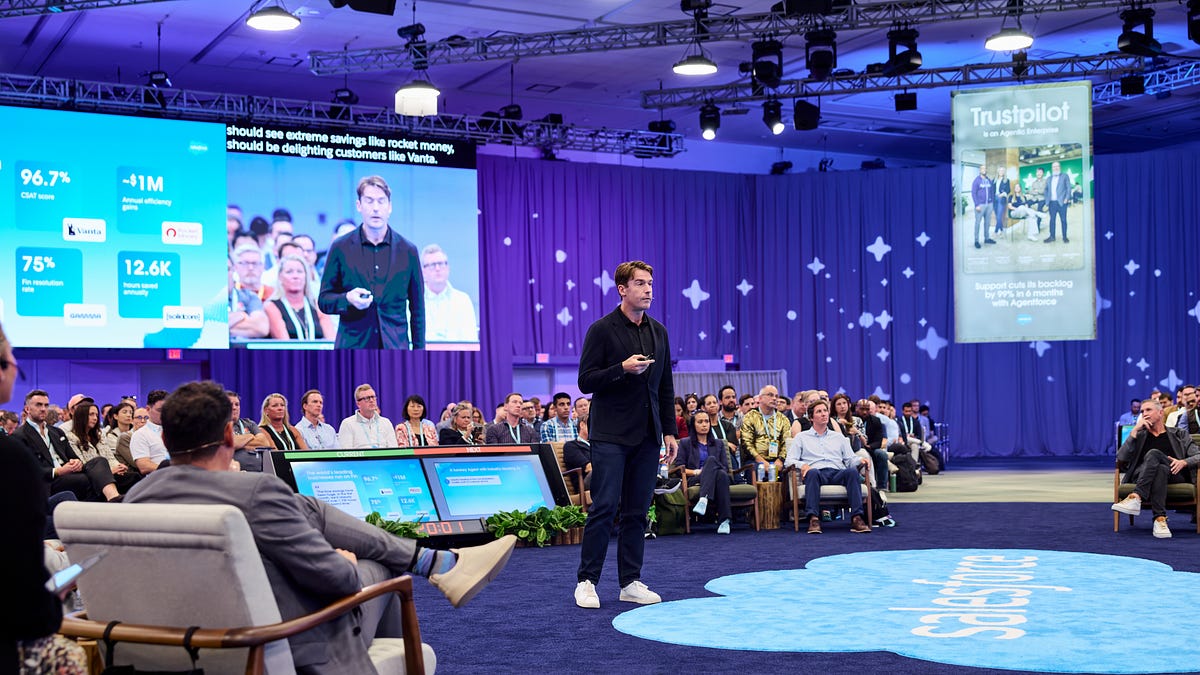
The company's bet: customers will increasingly use one, or just a couple, of more powerful agents to handle cross-functional tasks, instead of replacing current human job functions on a one to one basis. "It would be sad if we end up reinventing the world with a dozen different, disparate tools," Traynor says.
"Everyone will rent the models, but we think people really need to own the information they have about their customers, and how they interact with them."
Pool everyone's private files too carelessly and the AI might put "people's salaries in a spreadsheet by mistake," he said. "Then you've got big egg on face." Over the next five years, though, he predicts that we will come to trust specially trained models to enforce company privacy policies on their own — and that small, high-trust companies will embrace unified company knowledge bases long before the enterprise does.
The reason is obvious when you think about it: enterprises are paying for their employees' time, so of course they are willing to pay for tools that make those employees more productive; consumers, on the other hand, are mostly looking to waste time, which is why attention-harvesting advertising is the only software business model that works at scale for consumer services.
4mo ago
Underscored — save the words that stop you in your tracks.