We are all instruments endowed with feeling and memory. Our senses are so many strings that are struck by surrounding objects and that also frequently strike themselves.
4d ago
We live, as we dream — alone. While the dream disappears, the life continues painfully.
What we are, who we are, and where we are going, I do not know, nor do I believe anybody who says he knows, except, possibly, Beethoven, in the last movement of the last symphony. All I know is that we are here, and that we are aware of the fact, and that it behooves us to be aware — to pay heed. For we are not objects.
1w ago
We are compelled to feel that the world presented to our senses is not the world as it really is, but only the world as it appears to beings constituted as we are. The thing in itself remains forever unknowable.
When a doctor finally noticed, he asked Bram to open his eyes when he heard the street he lived on being read out. The doctor named some random streets and then said, 'American Road.' Bram opened his eyes and his dad said, 'I knew it!'
2w ago
The mind, in short, works on the data it receives very much as the sculptor works on his block of stone. In a sense the statue stood there from eternity. But there were a thousand different ones beside it in the same stone, and the sculptor alone is to thank for having extricated this one from the rest.
2w ago
The true paradox of consciousness is that the more we know of ourselves, the more we become strangers to ourselves; for knowledge itself is a kind of forgetting—we lose the immediate simplicity of mere being in the complications of understanding what we are.
2w ago
The mind is like a river. While it flows, it is never the same water; and while it thinks, it is never the same thought.
"The man read and read, moving his lips; now and then his whole body started moving and then the words entered him like spirits, and began to work their mischief."
The great challenge, the great triumph, is to make of memory an instrument of presence.
3w ago
We are not thinking enough about thinking, and hardly thinking at all about awareness. Hardly thinking—which is the core of the matter.
3w ago
The true paradox of consciousness is that we are never more fully ourselves than when we have forgotten ourselves—and this forgetting is not a loss but a gain, for in losing the boundary of self we touch something universal.
4w ago
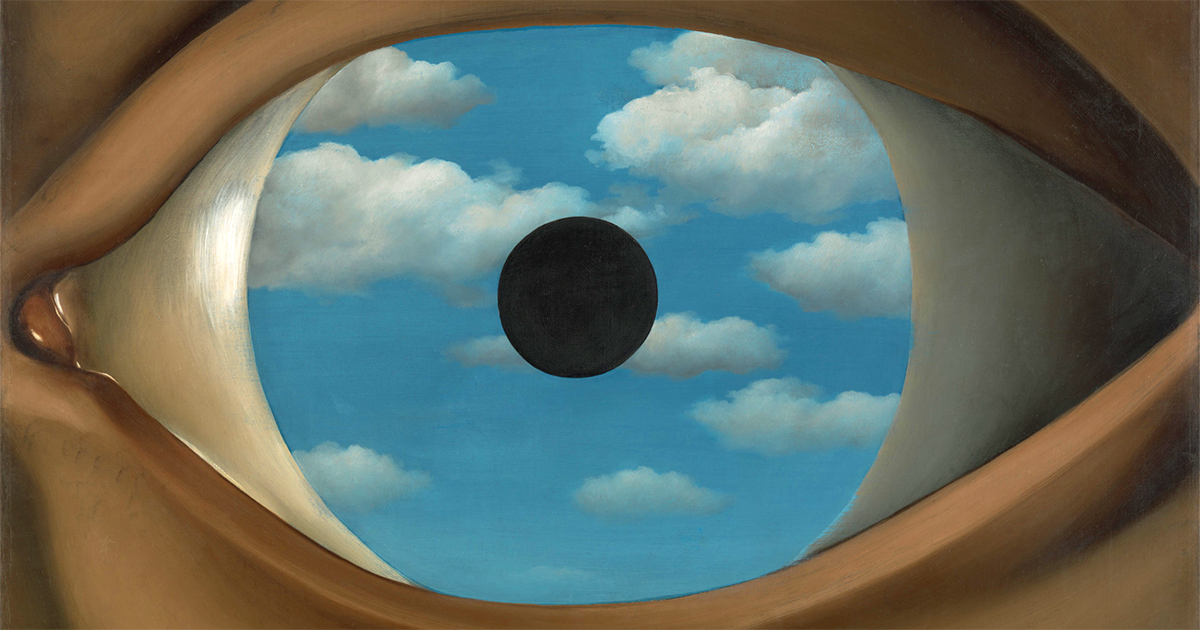
The eye is not merely a physical organ, but the supreme instrument of the mind; it is the only sense that can perceive beauty, and beauty is the only thing that makes life worth living.
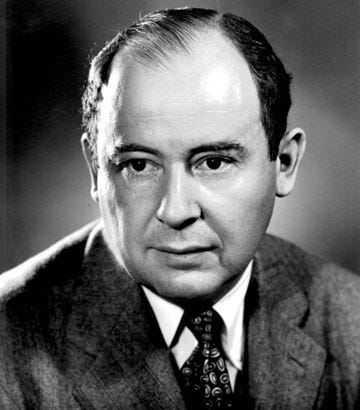
Von Neumann's conclusion, reached not as a mystic but as the most rigorous mathematician of his century, was that the break must happen outside the physical. Consciousness is what collapses the wavefunction. Consciousness is what turns the possible into the real.
The paradox of our time is that although we now know that consciousness itself is a full-body phenomenon, we have continued our campaign of denying the animal nature of the human animal by negating the significance, the relevance, the very fact of the body.
1mo ago
The true paradox of consciousness is that we become most fully conscious precisely at those moments when we forget ourselves—when we are absorbed in something other than our own ego.
1mo ago
One cannot be deeply responsive to the world without being saddened very often. Yet one cannot stop from living in the world. This is the paradox of consciousness itself—that we become most fully alive precisely through our capacity to suffer.
At the back of our brains… [there is] a forgotten blaze or burst of astonishment at our own existence. The object of the artistic and spiritual life [is] to dig for this submerged sunrise of wonder; so that a man sitting in a chair might suddenly understand that he [is] actually alive, and be happy.
1mo ago
The eye is not merely a physical organ, but the supreme instrument of touch, and we see only with our eyes open to the world; blindness is not the absence of sight but the refusal to look.
The self, the place where we live, is a place of illusion. Goodness is connected with the attempt to see the unself, to see and to respond to the real world in the light of a virtuous consciousness. This is the non-metaphysical meaning of the idea of transcendence to which philosophers have so constantly resorted in their explanations of goodness.
1mo ago
I conceive a man's body as a sort of fiery mist enmeshed in the cage of the skeleton, and mostly resulting from the circulation of the blood.
The problem of other minds means that the hard problem of consciousness will never fully be solved. Since you'll never know whether other people are really conscious, you'll never be able to get hard scientific evidence about why they're conscious.
1mo ago
The true paradox of consciousness is that we become most fully conscious precisely when we lose the sense of being conscious at all, when the instrument becomes so perfectly attuned to its object that subject and object merge into one continuous act of perception.
1mo ago
We live in succession, in division, in parts, in particles. Meantime within man is the soul of the whole.
1mo ago
The mind of man is capable of anything—because everything is in it, all the past, all the future, all the possibilities of existence.
Like desire, language disrupts, refuses to be contained within boundaries. It speaks itself against our will, in words and thoughts that intrude, even violate the most private spaces of mind and body.
1mo ago
The true paradox of consciousness is that we become most fully conscious precisely when we cease to be aware of ourselves—when the self dissolves into action, perception, or creation.
1mo ago
The mind of man is capable of anything because everything is in it, all the past as well as all the future.
1mo ago
The true paradox of consciousness is that we become most fully conscious precisely when we cease to think about consciousness at all, and surrender ourselves to the world.
1mo ago
The mind of man is capable of anything—because everything is in it, all the past as well as all the future. What he has to do is to accept it or reject it, take it or leave it.
2mo ago
The mind itself is the seat of action. We do not act because we think, but we think because we act.
2mo ago
We are made of starstuff. We are a way for the cosmos to know itself. We have come from the interstellar medium and into the form of conscious beings able to ask the supreme questions.
2mo ago
The true paradox of consciousness is that the more narrowly we examine it, the more it seems to elude us, as if consciousness were not an object to be grasped but a field in which the grasping occurs.
2mo ago
The purpose of consciousness is to orchestrate behavior, and consciousness succeeds brilliantly at this task when it stays in the background, when it doesn't interfere with the smooth operation of the automatic processes that have been honed by natural selection.
2mo ago
The true paradox of consciousness is that it cannot be fully grasped by introspection alone; the observer is always part of the observed, creating an irreducible gap between the thinking subject and its own thought.
2mo ago
The true paradox of consciousness is that the more we think about it directly, the more it eludes us; yet in the very act of eluding our grasp, it reveals itself most fully.
2mo ago
The mind is furnished with a set of instincts which seek out certain kinds of phenomena and are peculiarly sensitive to their presence, and which, once awakened, work and grow by exercise. Our forefathers had convictions; we have only opinions.
2mo ago
The mind is furnished with a set of instincts which seek out certain kinds of phenomena and tend to ignore the rest, and all the phenomena thus ignored are as if non-existent for the mind. The consequence is that the mind, by the mere fact of attending to a limited set of phenomena, creates, in a sense, a limited world.
If there can be no physicalist explanation of subjective mental experiences, then the project of physicalism falls apart. "If we acknowledge that reality surpasses our comprehension [...] then we are back to mystery".
Death makes human beings seem like very small containers that are packed so densely we can only be aware of a fraction of what's inside us from moment to moment.
2mo ago
The true paradox of the human condition is that we are simultaneously utterly insignificant and infinitely precious—strangers to the universe yet the only part of it that knows itself.
2mo ago
The mind is like a vast library in which the books are in constant flux—some volumes fade into obscurity while others suddenly illuminate corners previously left in shadow, and the librarian himself is often the last to know what treasures or horrors his collection contains.
3mo ago
The human species is engaged in the act of creating itself. We are shaping our own evolution through the choices we make, yet we proceed as though we were merely passive observers of our own development.
It may be that in REM, this gloaming between waking consciousness and the unconscious, we practice the possible into the real. It may be that we evolved to dream ourselves into reality — a laboratory of consciousness that began in the bird brain.
3mo ago
A human being is part of a whole, called by us the Universe, a part limited in time and space. He experiences himself, his thoughts and feelings as something separated from the rest, a kind of optical delusion of his consciousness.
Before the electrodes were attached to his head he'd lost everything tangible: money, property, children; even his rights as a citizen had been taken away from him by order of the court….I will never know all that was in his head at that time, nor will anyone else.
Whatever our beliefs, these sensemaking playthings of the mind, when the moment of material undoing comes, we — creatures of moment and matter — simply cannot fathom how something as exquisite as the universe of thought and feeling inside us can vanish into nothingness.
life stares mutely back at us, immense and indifferent, having abled us with opposable thumbs and handicapped us with a consciousness capable of self-reference that renders us dissatisfied with the banality of mere survival.
3mo ago
The mind of man is capable of anything—because everything is in it, all the past as well as all the future.
3mo ago
Underscored — save the words that stop you in your tracks.