underscored

@underscored

33 clips · 1 follower

Follow
Tag:contrarian-thinkingClear

The stock market is filled with individuals who know the price of everything, but the value of nothing. Prices are set at the margin by the most motivated seller and the most motivated buyer — and neither is representative of rational long-term value.

— Philip Fisher, Common Stocks and Uncommon Profits (1958)
6d ago

Mimicking the herd invites regression to the mean. The problem is not just that everyone owns the same securities; it's that everyone has internalized the same reasons for owning them, and will therefore sell at the same time for the same reasons.

1w ago
The dumbest reason in the world to buy a stock is because it's going up. The second dumbest is to sell it because it's going down. The price tells you nothing about the value, and the crowd's opinion of price tells you even less.

2w ago

Mimicking the herd invites regression to the mean. The problem is not just that you end up average — it's that you've taken on all the risk of being wrong while surrendering any chance of being interestingly right. Consensus is the enemy of asymmetric returns.

4w ago

Mimicking the herd invites regression to the mean. The problem is that most investors feel safest when they are most in danger — when asset prices are high and everyone agrees the future is bright. Safety, paradoxically, is found in the places that make you most uncomfortable.

4w ago

The time to buy is when there's blood in the streets, even if the blood is your own.

4w ago

Mimicking the herd invites regression to the mean. You don't get rich by buying what everyone else is buying at the price everyone else is paying. The excess return, if there is one, goes to those who are early and right — and being early often looks, for a time, indistinguishable from being wrong.

1mo ago

The dumbest reason in the world to buy a stock is because it's going up. And the dumbest reason to sell a stock is because it's going down. People do this every day, and it's a form of madness — they're letting the market tell them what to think instead of thinking for themselves.

1mo ago

Most people think that if they just had more information, they'd make better decisions. But the limiting factor is almost never information — it's the willingness to act decisively on incomplete information while others are still waiting for certainty that will never come.

1mo ago
whyisthisinteresting
The AI and Writing Edition

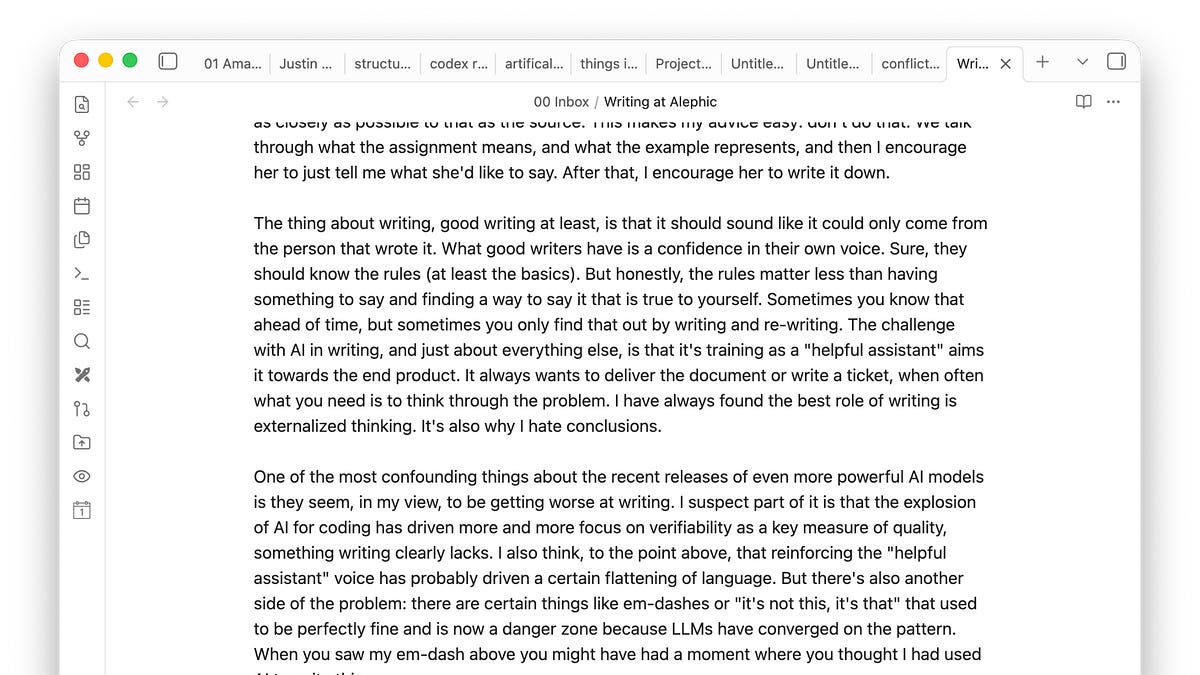
The other problem, I think, is that good writing is fundamentally anti-consensus. For writing to be above average, it shouldn't sound like everything else. My daughter might get a fine grade aping the teacher's example essay, but the road to good, or even great, is doing it your own way.

2mo ago

Mimicking the herd invites regression to the mean. As a truly active manager, if you're not making bets that look wrong to most people most of the time, you're not doing your job.

2mo ago

We are all agreed that your theory is crazy. The question which divides us is whether it is crazy enough to have a chance of being correct.

2mo ago

Worldly wisdom teaches that it is better for reputation to fail conventionally than to succeed unconventionally.

2mo ago

You have to be willing to look wrong for a long time before you look right. The market has no obligation to validate your thesis on your schedule.

3mo ago

The fly that doesn't want to be swatted is safest if it sits on the fly-swatter.

3mo ago

Mimicking the herd invites regression to the mean. You will never produce a superior performance unless you do something different from the majority — and that is harder than it sounds, because the majority is usually wrong about enough things to be dangerous, but right about enough things to be seductive.

3mo ago

Risk means more things can happen than will happen. The practical definition of risk is not volatility or a standard deviation — it's the possibility of permanent loss of capital. Volatility is opportunity dressed in frightening clothes.

3mo ago

Mimicking the herd invites regression to the mean. You will never produce a superior investment record by buying what everybody else is buying. The decisions that look best in retrospect are often the ones that felt most uncomfortable at the time.

3mo ago

The biggest constraint on the returns of a large investor is the investor himself. Most people think they need more information, better models, faster data. But the actual binding constraint is almost always temperament — the ability to hold a variant view, in size, for a long time, while being wrong in ways that are publicly visible.

4mo ago

Mimicking the herd invites regression to the mean. If your portfolio looks like everyone else's, you may feel comfortable, but all you can expect is average performance. It's only by departing from the consensus that you can achieve superior results — but departing from the consensus is where career risk lives, and most investors won't do it.

4mo ago

The lesson of history is that there have always been more buyers of stability than sellers of it. When uncertainty rises, the price of certainty rises with it — and those willing to sell certainty at that moment earn returns that compound for decades.

4mo ago

The ability to destroy your ideas rapidly instead of slowly when the occasion is right is one of the most valuable things you can have. You have to work hard on it. Ask yourself what are the arguments on the other side. It's bad to have an opinion you're proud of if you can't state the other side better than your opponents.

4mo ago

The stock promoter sells sizzle, but the great investor buys the business nobody is talking about yet. Most of the time the exciting story and the good investment are mutually exclusive — the more compelling the narrative, the more the price has already discounted the future.

5mo ago

Mimicking the herd invites regression to the mean. Unconventional behavior is the only road to superior investment results, but it isn't for everyone. Uncomfortably idiosyncratic positions can result in short-term performance that is worse than the market or peers.

5mo ago

The best time to buy is when there's blood in the streets. The second best time is when everyone else is buying.

5mo ago

The best way to think about the future is to invent it. People are often afraid to bet on radical change, so the market systematically underestimates how much the world can improve.

5mo ago

The best ideas are often dangerous ideas. You're not supposed to think them. And if you do, you're not supposed to say them. But the truth doesn't care about your comfort.

6mo ago

The best time to buy is when there's blood in the streets. The best time to sell is when there's irrational exuberance. Most people do the opposite.

6mo ago

The best investment is in yourself. But the second-best investment is often in things that are so obvious and so important that nobody is paying attention to them because everyone assumes someone else is handling it.

6mo ago

Most of them are hidden from view in the stagnant mainstream culture of our time, where tired formulas and AI slop prevail. These are the real deal, and give me reason for optimism about the future of our music culture.

7mo ago

At the time, though, with Japan at its zenith, it was easy to make Vogel-like predictions of continued domination, and it was out of vogue to be a contrarian like Emmott. The same is true of China today.

7mo ago

The size of the opportunity is inversely proportional to how many people think it's an opportunity. If everyone believes something is a great opportunity, then by the time you get there, it's probably not.

7mo ago

Underscored — save the words that stop you in your tracks.

Start saving quotes →