For most consumers, brand has functioned as a research shortcut. Nobody generally has ten hours to hone in on the greatest mousetrap, mattress or dishwasher, so we outsource the decision to familiarity: the name we've heard, the logo we trust, the thing our parents bought. "Nobody ever got fired for buying IBM" is perfect shorthand.
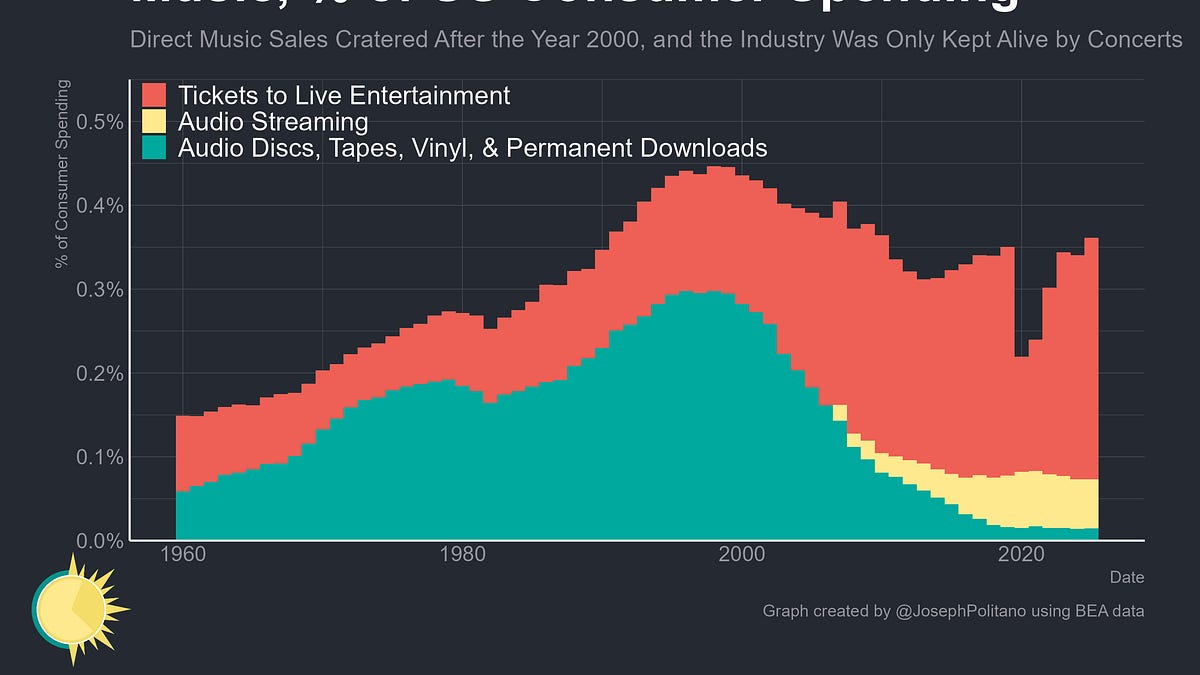
The entire music industry has embraced digital tech and streaming. But the music economy is going in the opposite direction—back to live music and in-the-flesh contact with the audience. As a result, the percent of consumer spending targeted at concert tickets is growing rapidly. Income generated by digital music has meanwhile collapsed, and shows no sign of rebounding.
Overwhelmed theater apps and a scarcity mindset around exclusive big-screen formats for blockbusters like Dune: Part Three and The Odyssey have led to the 'concertification' of movies.
Progressives have been howling about tech company surveillance for over a decade, but they all still have The iPhone in their pockets. Shoshana Zuboff wrote a book about surveillance capitalism, with the main result being that people can now remark that Shoshana Zuboff wrote a book about surveillance capitalism.
If you spend enough nights on the floor listening to people order martinis, explain natural wine to dates, or negotiate status through reservation choices, you start to realize restaurants are basically focus groups for contemporary aspiration.
The reason is obvious when you think about it: enterprises are paying for their employees' time, so of course they are willing to pay for tools that make those employees more productive; consumers, on the other hand, are mostly looking to waste time, which is why attention-harvesting advertising is the only software business model that works at scale for consumer services.
The worst websites often belong to the best manufacturers. Heritage brands that have been making quality products for decades frequently have terrible websites that are hard to navigate. This puts them at a disadvantage compared with Amazon or well-funded DTC brands. AI levels the playing field by making it just as easy to shop from a 100-year-old manufacturer with a clunky website as from Amazon.
61% say they would cancel their favorite service if the price went up by just five dollars. Let me repeat that—they would cancel their favorite service, not just any platform.
But at the end of the day, it's consumption, not production, that defines you as an individual. That might sound like an odd thing to say, especially if you've grown up believing — as my liberal parents taught me — that advertising is a form of mind control that greedy corporations use to force you to consume things you don't really need.