It's the latest example of how crypto practitioners (see also: OpenRouter, Venice AI) are somewhat quietly helping to lead the way in pushing for privacy-first, local and decentralized access in AI, even if they don't call themselves crypto founders anymore.
My Google Home Speaker had been burning through more data than all the rest of my devices combined. As I looked into it further, I found other smart home devices that had the same problem.
Amazon is now compiling highly inappropriate profiles on users—that's how Sarah Esterman learned that she has a bad father. Another customer was told that she has "flat buttocks." She doesn't deny it—but do we really want Amazon monetizing these intimate details?
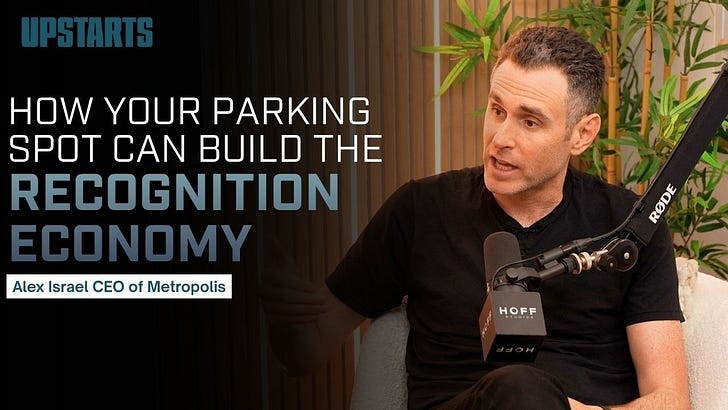
In a future where there are cameras everywhere, he claims that Metropolis could provide the digital passport to help you choose which ones you want identifying you or not. "The question is, do I want that camera to recognize me? And that's the infrastructure layer that Metropolis is building," he says. "Control being in the hands of the consumer is the ultimate control."
So the way advertising is going to work in the future, and it’s already happening, is it’s going to predict what you want. So what you’re going to do is you’re going to get a personalized ad predictor that basically is inside your VM. They’re going to be credibly able to say it’s totally private, because it is totally private.
Flock Safety has become an $8 billion surveillance giant by installing license-plate-reading cameras across more than 5,000 communities, helping police solve crimes while creating what critics fear is one of the most powerful tracking networks in America. Its cameras can potentially reconstruct where people drive, work, sleep, and worship. How much privacy are Americans willing to trade for safety?
Pool everyone's private files too carelessly and the AI might put "people's salaries in a spreadsheet by mistake," he said. "Then you've got big egg on face." Over the next five years, though, he predicts that we will come to trust specially trained models to enforce company privacy policies on their own — and that small, high-trust companies will embrace unified company knowledge bases long before the enterprise does.
We imagine a future where your AI works entirely for you and deeply aligns with your values. Compared to the corporate chatbots of today, it will feel completely different: responsible, curious, and truly yours. Most importantly, you'll own everything: the hardware it runs on, the data it learns from, and the intelligence itself.
"If you have a backdoor way for someone in power to use all this context to make judgment calls in that way, that doesn't feel right to me, and that's not a future we want to build towards," Pedregal said.
You do hear people say privacy is dead, but it's almost always someone who stands to profit from the death of privacy—famously, Mark Zuckerberg. This is a hopeful pitch.
The sites that data brokers sell your information to aren't doing anything technically illegal. They're aggregating public records—voter registrations, property records, court documents—and repackaging them for profit.
Four people suing Elon Musk's AI firm under pseudonyms due to the risks of being identified may face a difficult choice: Reveal your real names, or drop the lawsuit.
5mo ago
The more the data banks record about each one of us, the less we exist.
Increasingly, identity is a raw material that scammers, spammers, and even platforms can remix without your permission — unless you show up to claw it back.
At the same time, for the majority of people, encryption is a protective technology. Activists, sex workers, LGBTQ users in authoritarian states, people discussing reproductive rights in post-Dobbs America, and journalists and their sources are among the many groups that benefit from being able to talk in private.
Devevillance's Spectre I, developed by a recent Harvard grad, wants to give people control over the always-on wearables surrounding their lives. The problem? Physics.
Who wants mass surveillance? Only the Epstein class. The robot's point was that billionaires often build powerful surveillance technologies while simultaneously going to great lengths to maintain their own privacy.
The paradox of Jason Lee—to me, The Enemy, at least—is that he is a celebrity who openly invites fans to come hang out with him on a regular basis, but who also has historically remained a notably private person.
8mo ago
Underscored — save the words that stop you in your tracks.