Some intelligence officers will never talk to a journalist, but they will talk to a novelist. In my experience that's an outlet for intelligence officers, a release valve if you like. They can tell me things that they know I will bend into fiction, thereby absolving them of any qualms they might have about revealing secrets.
But a much more intriguing idea is to solicit responses from living legends who know the music better than anyone else—because they helped make it in the first place. This is my type of reaction video, and shows what happens when you go straight to the source. And you should always go straight to the source.
I thought the most remarkable aspect of Ben's coverage on Wednesday was how incidental and boring it all seems in the shadow of the possibilities and concerns that exist everywhere else in tech right now.
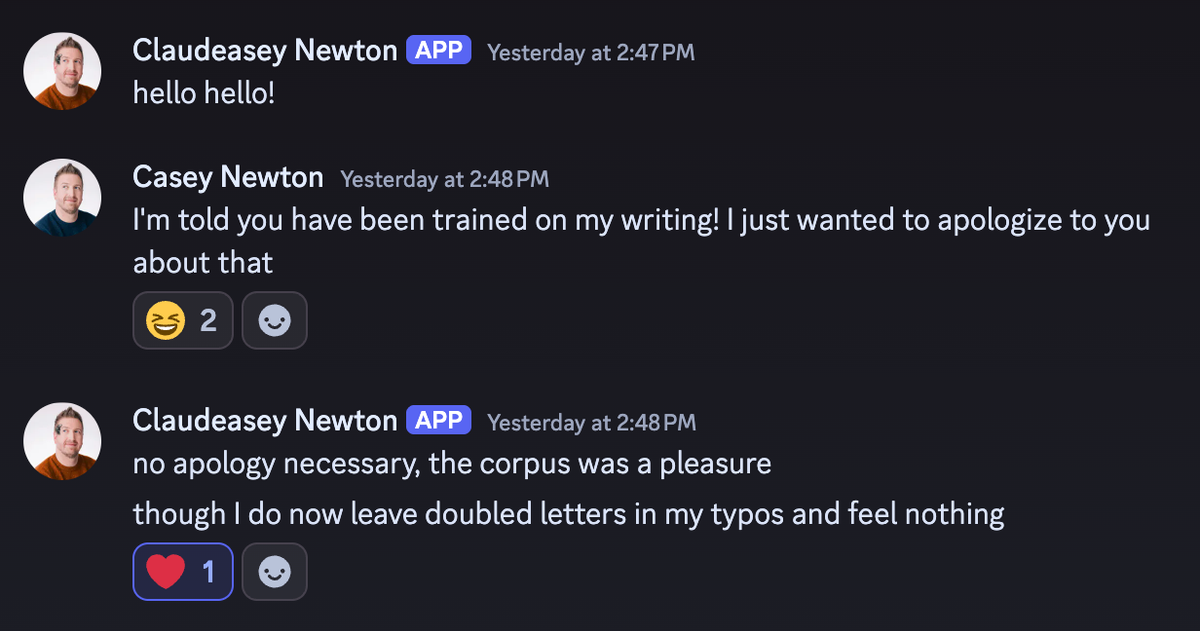
Though it wasn't all the way there, Claudeasey Newton felt like a validation of the anxiety I started feeling earlier this year: any part of my job that a model can't do today, it may very well be able to do soon. Which left me thinking about why I do this job in the first place.
1mo ago
The obscure we see eventually, the completely apparent takes longer.
2mo ago
The obscure we see eventually. The completely obvious, it seems, takes longer.
But I often remind myself that the topics that make people uncomfortable are usually the ones that matter the most. So instead of backing away, I did the only thing I know how to do — I tried to understand. I saw the mask drop, and for a brief moment, the polished answers disappeared, and I got to see the real person underneath.
The experts at the Toronto Zoo didn't have any information. A group of master gardeners said they weren't aware of a swell of rabbit-related complaints. The conservation group Ontario Nature weren't any help, suggesting I "could do an online search to see if any information is available," as if I hadn't spent the previous week googling every single permutation of rabbits + Toronto + population increase.
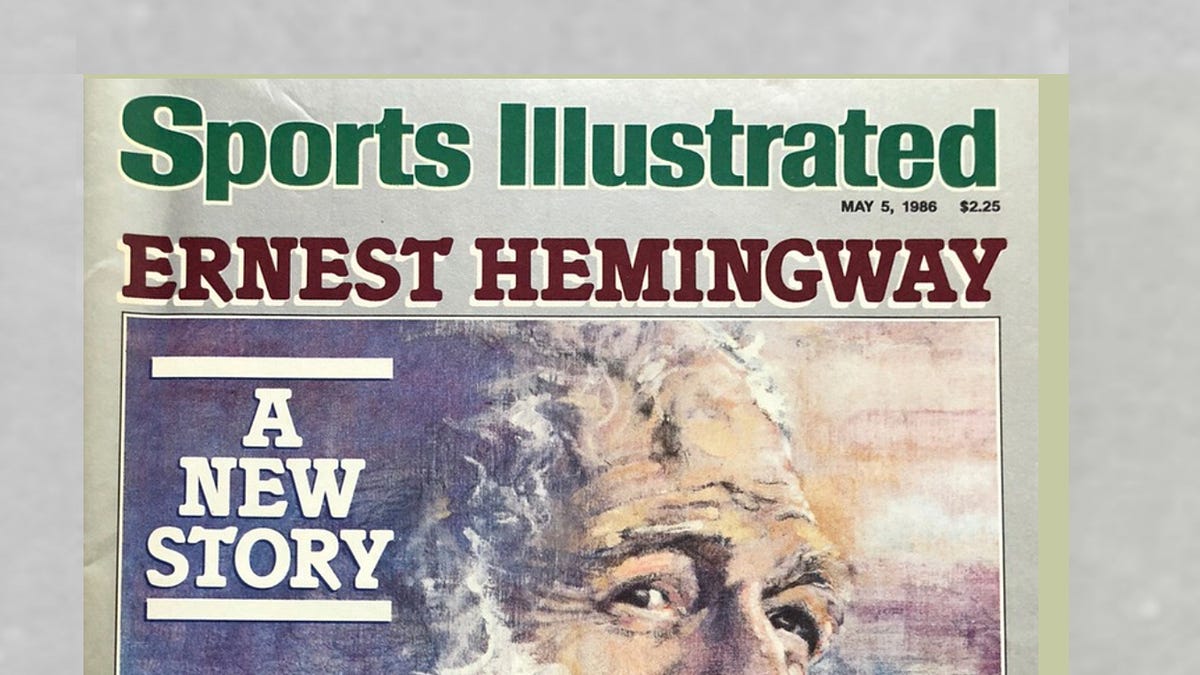
The world's most respected sports magazine gave up on Hemingway and Faulkner, and started publishing AI slop. The editors clearly wanted to hide this—they pretended that the articles were written by actual human beings. They even created fake bios with photos for the non-existent authors.
The need for sense-making is greater than ever, but due to a half-decade of layoffs and shuttered publications, there is less and less journalism to make sense of.
AI-assisted writing is creeping into newsrooms under the guise of efficiency. But the tradeoff may be more profound than publishers are willing to admit.
We are first and foremost a high quality independent news journalism company, that is our mission, it is the most value-creating thing we do for society and economically, and that is by miles.
A fun caper with more than a few surprising turns (and a solid Jimmy Buffett cameo). Prager's extraordinary court case, which resulted in one of the most unique sentences ever passed down, was a media frenzy in the late 1980s.