underscored

@underscored

29 clips · 1 follower

Follow
Tag:geopoliticsClear
noahpinion.blog
How we can beat China

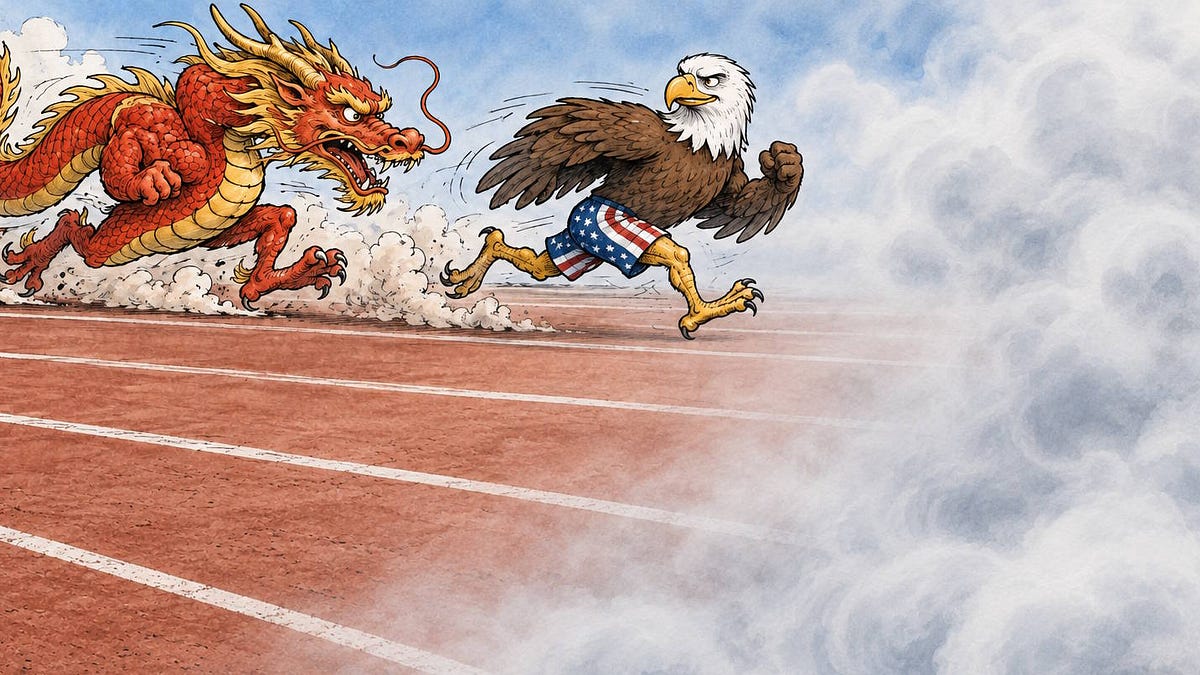
The United States is simply too internally divided to engage in the sort of far-seeing, purposeful, smart kind of international competition that we pursued so effectively in the 20th century. Americans care more about fighting other Americans than about fighting the Chinese, and that state of affairs will persist for a while.

Noah Smith
2h ago

What the United States needs, now more than ever, is general disengagement from the Middle East — an end to military adventures, a dialing back of support for Middle Eastern 'allies' (including Israel), and a forceful rejection of Middle Eastern issues in American domestic politics.

1w ago

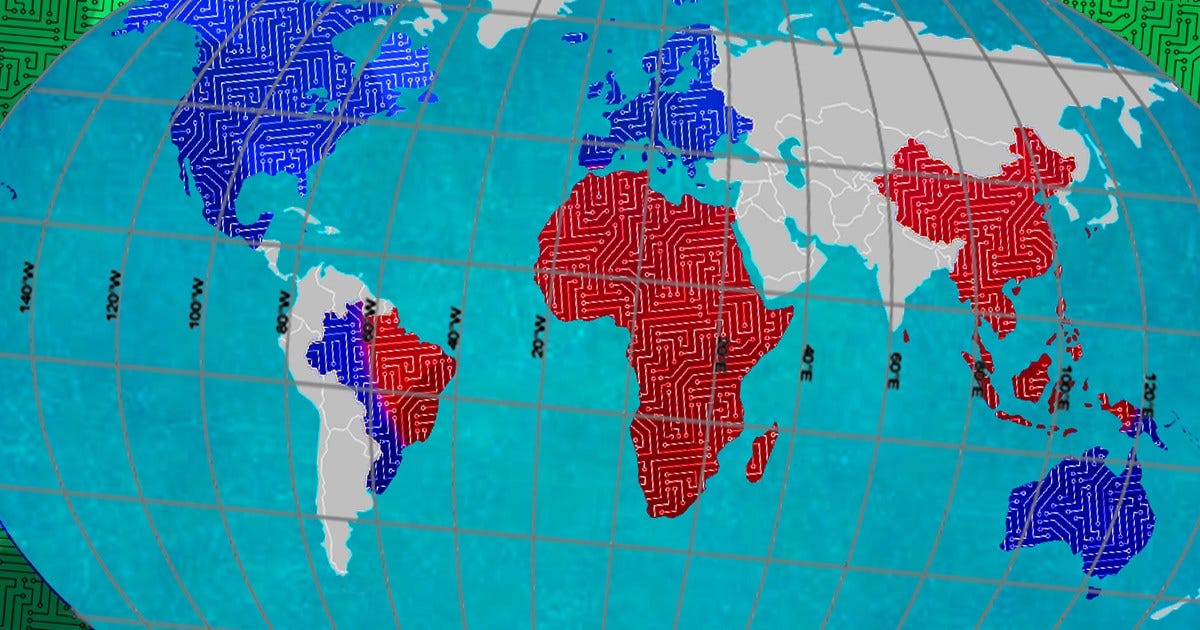
Sovereign AI could become an extinct dream without proper support. In a world of increased centralization and National self-interests, how do countries move forward in an AI future so dominated by U.S. and China?

1w ago

Imagine if China were to gain a big lead in AI models that gave it the power to easily hack into American banks and brokerage accounts and erase people's wealth. It would cause absolute chaos in American society, but how could the U.S. retaliate? Launch nukes?

2w ago

The China of 2036 will be vastly different than the China of 2026. Companies that used to manufacture luxury handbags are now becoming the brands themselves. Investors who used to copy American VCs are now running their own state-backed deeptech playbooks.

3w ago

When he entered office, East Asia had 1.22 billion people living on less than $3 a day (in 2021 dollars) — more than half the world's total. By the time Xi Jinping became China's top leader, that number was one-sixth of what it had been: This is the biggest and fastest decrease in absolute poverty that the human race has ever seen.

1mo ago

The Trump Administration is also deliberating whether to ban Chinese open-weight models. The U.S. Department of Commerce rolled out sweeping initial export controls banning the sale of top-tier AI accelerators (AI Chips) starting in October, 2022. After almost four years later how did that turn out?

1mo ago

If every new Chinese model has the potential to debut in the top five best models by intelligence, that's a big problem for the AI industrial complex of the U.S. The China problem in AI for the United States isn't just there, it's getting worse.

2mo ago

The real version is more useful to you as an investor: the single most capable model Anthropic has ever released to the public was considered serious enough that a government reached for emergency export controls — and it's now sitting in the same app you already use.

2mo ago

The most interesting idea is that countries become great powers due to their mastery of the most important technologies of the day — gunpowder, sailing ships, steam power, mass production, steel, the combustion engine, industrial chemicals, electricity, airplanes, and so on. It's also possible to imagine that leading nations fall behind due to technological disruption. Britain's industrial revolution made mercantile trade less pivotal as a source of national wealth, so the Netherlands fell behind.
2mo ago

Before the war, Iran didn't control the strait, simply because it didn't realize it could. Drone technology had advanced to the point where Iran was able to shut down Hormuz, but Iran didn't know that until the U.S. attack forced it to try the risky and desperate move of actually shutting it down.

3mo ago

Even if one country is better at making everything, it doesn't have a comparative advantage in everything. That's impossible. Every country has a comparative advantage at something! That's why in the theory of comparative advantage, trade is balanced. In the real world, China's massive trade surplus means that trade is not balanced; much of the time, China isn't trading goods for other goods, it's trading goods for IOUs.

3mo ago

the inference that will matter most in the future, at least in terms of market size, will be "agentic inference", where humans aren't involved at all. That will lead to very different trade-offs in architectures, and is good news for both China and space (but maybe not Nvidia).

4mo ago

Multinationals have learned the painful lesson that when they put their factories in China, their technology will be appropriated by Chinese indigenous companies — often with the help of the Chinese government — and then later used to outcompete them in global markets.

4mo ago

Ukraine is the clearest and most important example of how 21st century autocrats, having triumphed in the streets and on social media, are losing on the actual battlefield.

4mo ago

The ocean stood right beside the Moon in the American imagination, and it promised just as much: food and living space for a rapidly growing country, minerals and energy for a booming industry, and the upper hand in the Cold War.

4mo ago

The reference forecast has as its core assumption of a relatively limited conflict that gets resolved in the second half of the year and then with energy prices that are normalizing in that second half of the year and into next year. Very clearly, with every day that passes, where we don't have a resolution, where the flow of oil and gas is more limited through the Strait of Hormuz, we're moving away from that scenario.

5mo ago
3quarksdaily.com
War on Iran

The world has never seen an interruption on this scale to the supply of stuff. It easily surpasses the 1979 oil crisis, sparked by the Iranian revolution, in which crude oil production declined by 4 percent. Forty-seven years later, Hormuz is the passageway for one fifth of the world's crude oil and one fifth of its liquefied natural gas. It's also the transit point for a third of exported urea—a feedstock used for making fertilizer which grows the food for an estimated half of the world's population.

5mo ago
3quarksdaily.com
The Uncommon Enemy

The West's Cold War propaganda focused on decrying Communist totalitarianism and championing democratic freedoms, but the United States and its closest allies were mostly concerned with preserving their largest businesses' access to capitalistic markets and resources.

5mo ago

Iran has done the one thing that everyone — except, apparently, Donald Trump and his leadership team — had always expected them to do in a major war with the U.S. They have closed the Strait of Hormuz, through which about 20-25% of all global oil and liquefied natural gas flows.

5mo ago

For much of the past decade, the rise of artificial intelligence appeared to be governed by inputs that diffuse quickly. Advances in architectures, algorithms, training techniques, and data practices spread rapidly through academic papers, open-source code, and global talent markets. Because these inputs were highly replicable and only weakly tied to geography, it was natural to assume that AI capability would spread broadly across countries and firms. That assumption no longer matches reality.

5mo ago

At the time, though, with Japan at its zenith, it was easy to make Vogel-like predictions of continued domination, and it was out of vogue to be a contrarian like Emmott. The same is true of China today.

6mo ago
whyisthisinteresting
The Exit Permit Edition

What makes Kuwait's move so striking is that the rest of the Gulf has spent the last five years moving decisively in the opposite direction — and for reasons that have nothing to do with conscience. Qatar, under the sustained commercial pressure of World Cup scrutiny, eliminated exit permit requirements for most workers in 2020. The UAE has significantly loosened job-change restrictions, and Bahrain has done the same. These were pragmatic, strategic pivots by governments that understood something important: if you want to attract the global professional class — the fund managers, the architects, the regional directors choosing between Dubai and Singapore — you cannot run a labor system that treats people as controlled assets.

6mo ago

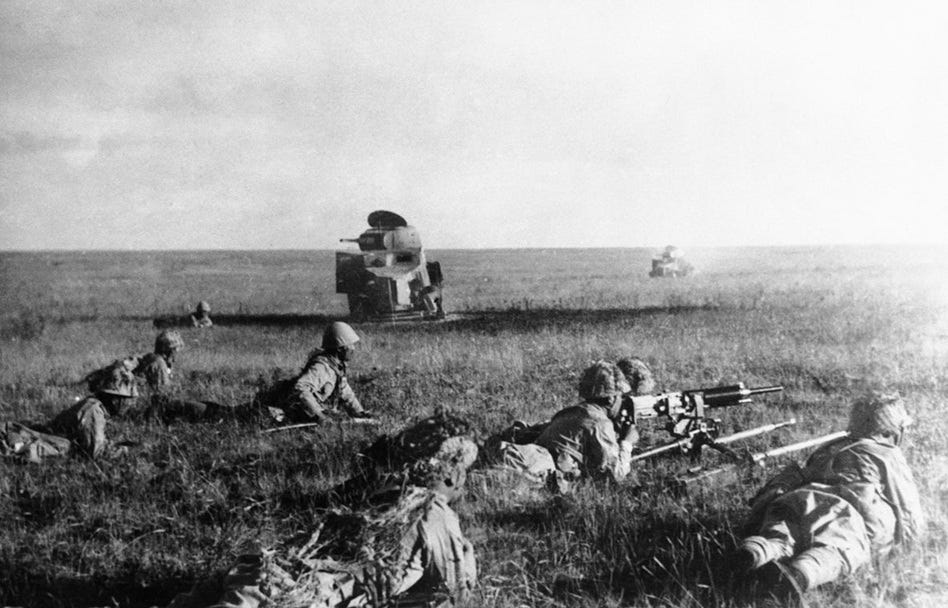
Although World War 2 officially began when Germany invaded Poland, conflicts that either foreshadowed the final conflagration or eventually merged with it began years earlier, in the mid-1930s. WW2 had foothills.

6mo ago

Underscored — save the words that stop you in your tracks.

Start saving quotes →