The biggest investing errors come not from factors that are informational or analytical, but from those that are psychological. Investors with no knowledge of (or interest in) a company's merits buy because the price is rising.
1d ago
Risk means more things can happen than will happen. The gap between those two things is where most investment mistakes are made — not from bad analysis, but from assuming the future is narrower than it actually is.
The biggest investing errors come not from factors that are informational or analytical, but from those that are psychological. Investors with no knowledge of (or interest in) a company's merits buy because the price is rising.
Most people think that finding a hot stock is investing. Finding a stock that is cheap is not enough; you also need a catalyst — something that will actually cause the price to reflect the value. Without a catalyst, you can be right and still lose money for years.
The record of the past is used to justify the present, but the future is where the real money is made. Most investors spend 95% of their time studying history and 5% imagining what the world could become — and then wonder why they keep buying things that have already happened.
A great business at a fair price is superior to a fair business at a great price. But what most people miss is the third lesson: the passage of time is the friend of the wonderful business and the enemy of the mediocre one. Patience isn't just a virtue in investing — it's a compounding force.
The best business returns are usually achieved by companies that are doing something that it's relatively easy to do, but that has a moat around it — and the moat is usually not a patent, it's usually a network effect or a cost advantage or something that's very hard to replicate.
Most people think diversification means owning many things. But the real diversification that matters is diversification across time — being able to survive long enough that the math works in your favor. Staying power is the asset most investors forget to buy.
The difference between a good business and a bad business is that good businesses throw up one easy decision after another. The bad ones give you horrible choices — decisions where every option has a serious downside.

AI is thematic ZIRP. To any layperson, the AI boom is another case of infrastructure overbuild that ignores product commodification and falling barriers to entry. But long-dated binary outcomes of incalculable extremes are protecting a broad subset of investors from multiple compression.
Most people think that if they just had more information, they'd make better decisions. But the limiting factor is almost never information — it's the willingness to act decisively on incomplete information while others are still waiting for certainty that will never come.
The market can stay irrational longer than you can stay solvent, but the deeper truth is that most investors go broke not from bad timing but from borrowing money to express a correct opinion too early. Leverage transforms a right idea into a ruin.
The trouble with most people is that they think with their hopes or fears or wishes rather than with their minds. The investor's chief problem — and even his worst enemy — is likely to be himself.
Diversification is protection against ignorance. It makes very little sense for those who know what they're doing.
The biggest returns in investing come not from picking the right answer, but from surviving long enough to be right. Time is the only factor that can't be faked, borrowed, or optimized away.
The best investors I've known don't just have high IQs — they have the rare ability to sit with unresolved questions for years without being compelled to act. Premature certainty is the enemy of superior returns.
Invest in a business any fool can run, because someday a fool will. If it won't survive that, it's not much of a business.
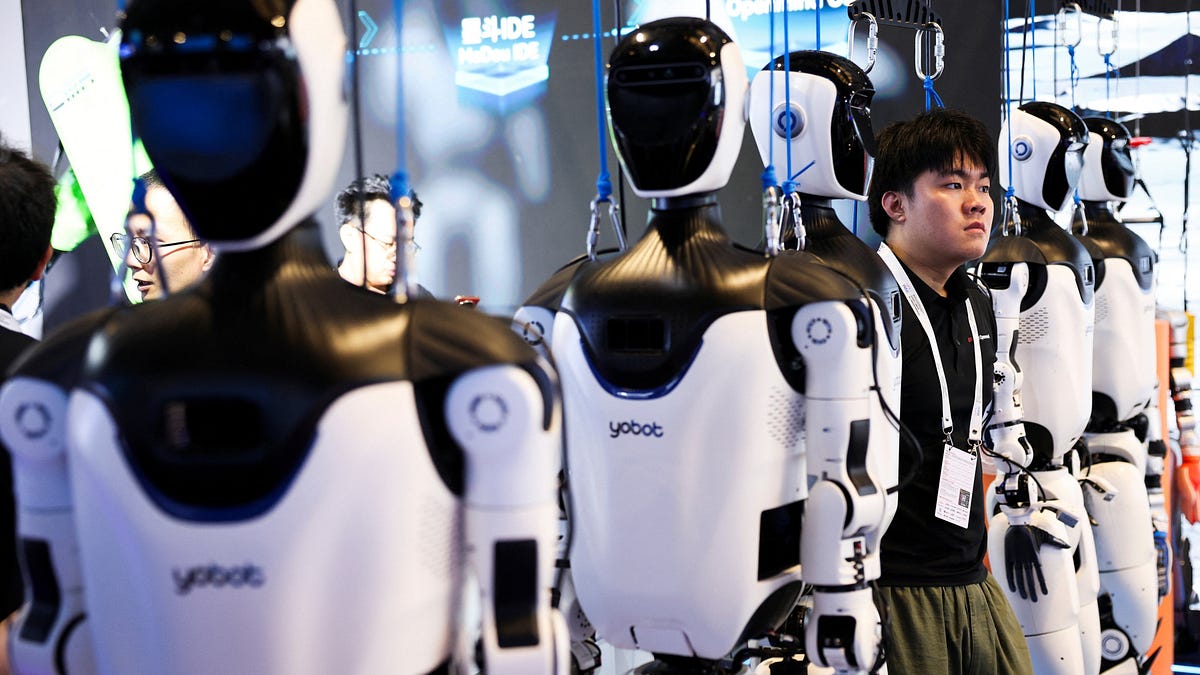
Over the past 18 months, the Shanghai Composite Index has risen 17.3 per cent. That is a respectable return, but it has not beaten the S&P 500 or the Nasdaq. The real gains have happened elsewhere, among the technology companies listed on ChiNext, Shanghai's STAR Market and the Hong Kong Stock Exchange.
The key to investing is not assessing how much an industry is going to affect society, or how much it will grow, but rather determining the competitive advantage of any given company and, above all, the durability of that advantage. The products or services that have wide, sustainable moats around them are the ones that deliver rewards to investors.
Leverage buyouts taught me that the real risk isn't paying too much — it's being wrong about the durability of the cash flow. A business that earns steadily through recessions is worth almost any price; one that merely looks cheap in a boom is a trap dressed as an opportunity.
The stock market is a device for transferring money from the impatient to the patient. But what most people miss is that patience itself is a skill — and like all skills, it atrophies without deliberate practice against the grain of every instinct you have.
The dealer's hand is the most important hand at the table, yet most investors spend all their time analyzing the other players. In markets, you must understand what the seller knows that you don't — not just what you believe the asset is worth.
Occasionally, the market does something so stupid it takes your breath away. The trick is to make sure you're there to take advantage of it — and that requires doing almost nothing most of the time, which is psychologically brutal for people who feel they're paid to act.
Most people think of risk as the probability of losing money. But the real risk is the permanent impairment of capital — a temporary price decline is not a loss unless you sell. The investor who confuses volatility with risk will systematically sell at exactly the wrong moment.
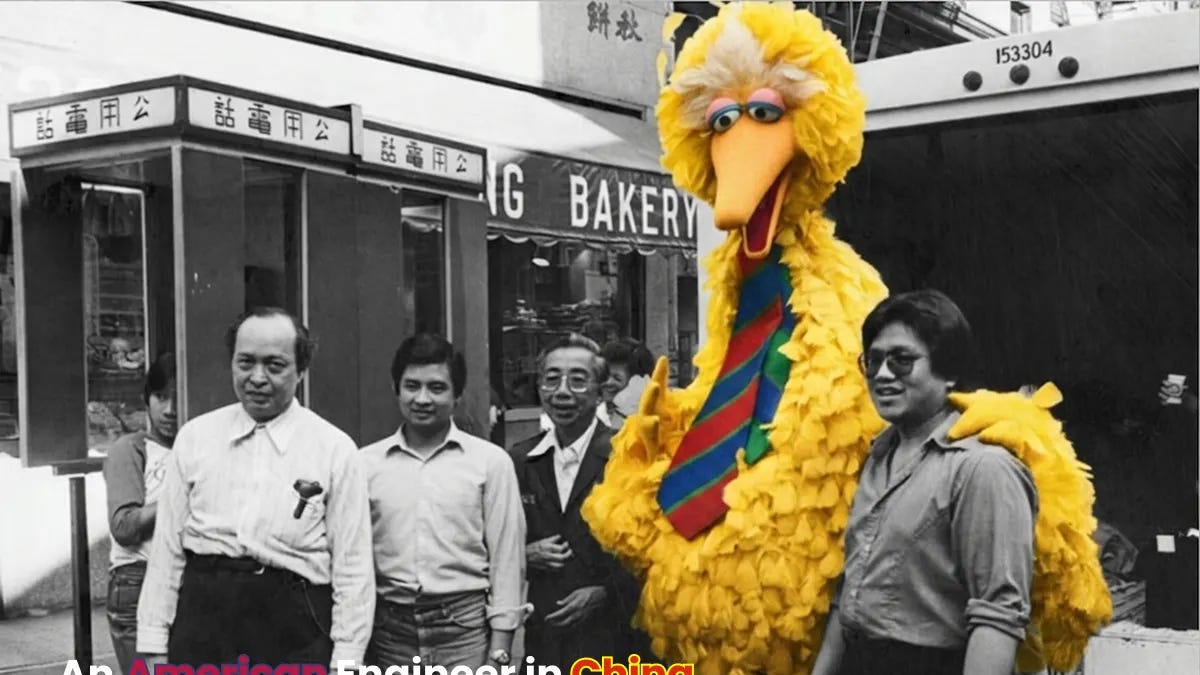
The China of 2036 will be vastly different than the China of 2026. Companies that used to manufacture luxury handbags are now becoming the brands themselves. Investors who used to copy American VCs are now running their own state-backed deeptech playbooks.
The single greatest edge an investor can have is a long-term orientation that other investors are structurally unable to adopt. Most institutions are prisoners of their own quarterly reporting cycles, which means patience itself is a source of alpha — not intelligence, not information.
Invert, always invert. Many hard problems are best solved by asking: what would guarantee failure? Avoid that, and success becomes far more likely than if you'd chased it directly.
The best way to think about how markets work is to imagine a voting machine in the short run and a weighing machine in the long run — but most people spend their entire careers trying to win votes instead of actual weight.
Mimicking the herd invites regression to the mean. As a truly active manager, if you're not making bets that look wrong to most people most of the time, you're not doing your job.
Investors have been so oversold on diversification that fear of putting too many eggs in one basket has caused them to put far too little thought into individual eggs. Diversification is a hedge against ignorance, nothing more.
The best single question to ask about any moat is: 'In ten years, will this business be harder or easier to compete with?' Most analysts ask about next quarter's margins. That's why most analysts are wrong about compounding.
The trick in investing is just to sit there and watch pitch after pitch go by and wait for the one right in your sweet spot. And if people are yelling 'Swing, you bum!', ignore them. There's a temptation for people to act far too frequently in stocks simply because they're so liquid. Over the years, you'd get very rich if you thought of yourself as having a punch card with only twenty punches in it for your whole investment lifetime.
The idea that a bell rings to signal when investors should get into or out of the market is simply not credible. After nearly fifty years in this business, I do not know of anybody who has done it successfully and consistently. I don't even know anybody who knows anybody who has done it successfully and consistently.
The market can stay irrational longer than you can stay solvent, but the deeper danger is that you'll convince yourself the irrationality is actually insight — that your losing position is just the world catching up to your genius.
The difference between a good investor and a great one isn't IQ or information — it's temperament. The great investor behaves as if the market is there to serve him, not to instruct him. Most people get this exactly backwards, which is why most people shouldn't be managing their own money.

The ten most shorted investment grade bonds are now all linked to AI. Bonds don't get mentioned much by the mainstream media, but they will now determine the future of Silicon Valley—which increasingly spends more cash than it brings in. When you borrow too much, you lose control of your destiny.
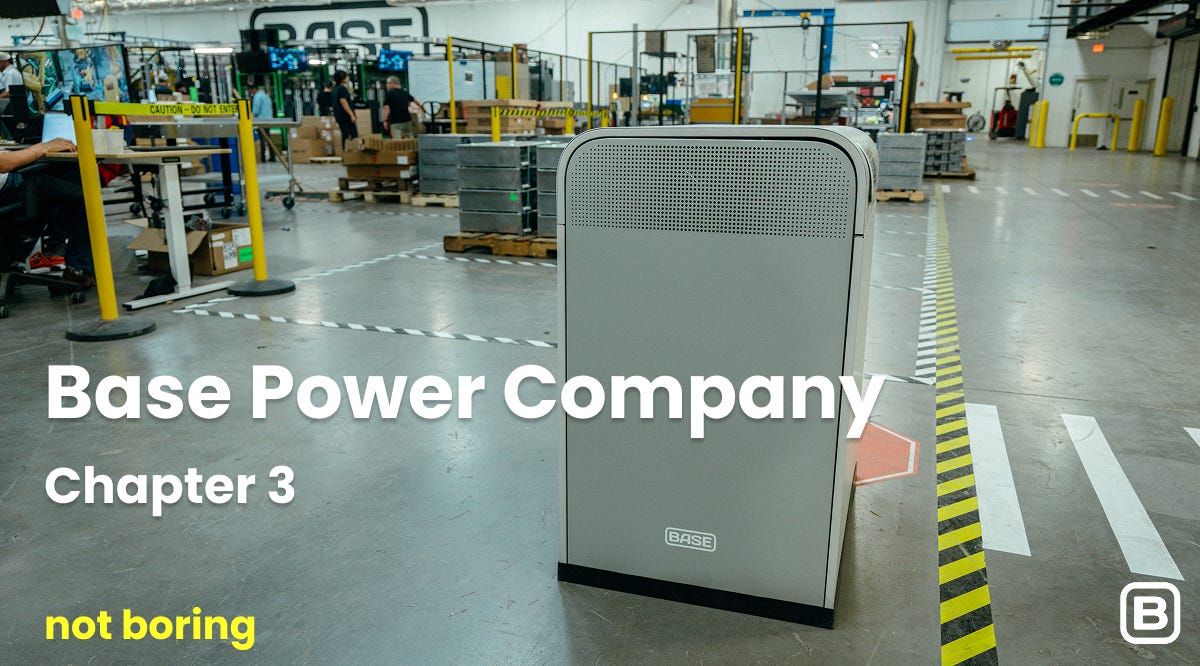
These companies were largely built around the winning assets of the previous energy system: oil fields, refineries, pipelines, tankers, centralized generation, poles, and wires. The energy transition that's been underway has already created new bottlenecks – the grid struggles matching variable supply with unpredictable demand, for example – and therefore new valuable positions. Then the most ravenous consumer of electrons in history entered the market in the form of data centers.
The difference between a good business and a great one is that a great one makes it hard to compete against it. A good one merely makes it hard to make money. The best business is one where you can keep repricing upward without losing customers—that's when you know you own something real.

Nvidia makes a rather outrageous claim that AI factory compute is becoming an investable asset. It's a $500 Billion third-party financing gig. Nvidia has cash to spare and will backstop up to $125 billion, or 25% of the potential deals.
Worldly wisdom teaches that it is better for reputation to fail conventionally than to succeed unconventionally.

Meta, Microsoft, Amazon and Google are all spending astronomical amounts of money building infrastructure from AI. Wall Street's reaction, however, differed markedly, based on the cost of the frontier (or not), the potential for immediate monetization (or not), and the clarity of vision (or not).
The record of a money manager who merely stays close to the market is not an outperformance record—it is a perfect recipe for underperformance after fees. The question is never 'did I beat the benchmark?' but 'did I add enough value to justify the cost of active management?' Most cannot answer yes, and most won't admit it.
Forgetting that your returns depend on the returns of the businesses you own—not on what you paid for them—is the source of more investment error than almost any other mistake I can think of. You must always ask: what will this business earn over time? Everything else is noise.
The stock market is a device for transferring money from the impatient to the patient. But patience itself is not a strategy — you must also be right about what you're waiting for.
The biggest competitive advantage in business and investing is a quiet life that allows for more time to think. Being perpetually busy is a social signal, not a productivity strategy—and the market rewards those who can sit still long enough to see what others are too distracted to notice.
The chains of habit are too light to be felt until they are too heavy to be broken. Most investors underestimate how much their early portfolio habits — the things they barely notice doing — compound into the architecture of their entire financial life.
A stock is not just a ticker symbol or an electronic blip; it is an ownership interest in an actual business, with an underlying value that does not depend on its share price. The market is there to serve you, not to instruct you.
Most people think of risk as the probability of losing money. But the real risk is that you'll be forced to sell at the wrong time — that circumstances, not judgment, will determine your outcome. Volatility is only dangerous if it can compel you to act.
The best investment you can make is in businesses you understand, and the second-best is in your own ability to understand more businesses. Most investors do neither — they buy what's rising and call it research.

He essentially turned $200 million into $45 billion in two years, given back in a month and I'm not even clear what's left or what's next.

He made for them a lot of money absurdly quickly and, on the first drawdown, took the pratfall himself. There's not much new information here. It's just a reminder that when it comes to allocating risk, the best investors are the ones you'll never hear of.
Underscored — save the words that stop you in your tracks.
Start saving quotes →