It is not the answer that enlightens, but the question. And to ask the right question is already to know the direction of the answer.
5d ago
The fact that an opinion has been widely held is no evidence whatever that it is not utterly absurd; indeed, in view of the silliness of the majority of mankind, a widespread belief is more likely to be foolish than sensible.
It is not the answer that enlightens, but the question. And to ask the right question is already to know the direction of the answer.
The most valuable of all talents is that of never using two words when one will do. And the most dangerous of all follies is to mistake the map for the territory.
We are compelled to feel that the world of our experience is not the world of reality, and yet it is only through the world of experience that we can come to know any world at all.
To be sheltered from the winds of doctrine is to be kept from contact with reality. The man who is protected against every draught of opinion is kept from the real world; but then, what is the real world?
The tendency of modern science is to reduce all natural phenomena to the action of matter, and to explain the complex by the simple. But this tendency has its dangers; it may lead us to forget that the simple is always an abstraction, and that the real world is infinitely complex.
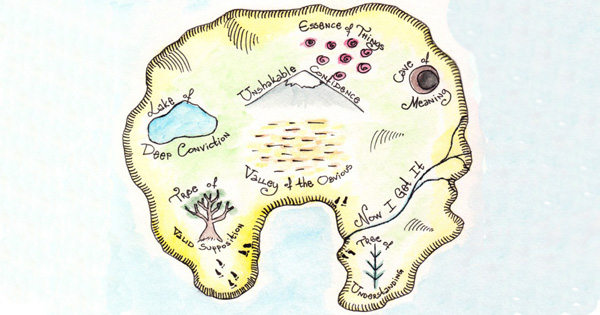
All sorts of torturers, dictators, fanatics, and demagogues struggling for power by way of a few loudly shouted slogans also enjoy their jobs, and they too perform their duties with inventive fervor. Well, yes, but they "know." They know, and whatever they know is enough for them once and for all. They don't want to find out about anything else, since that might diminish their arguments' force. And any knowledge that doesn't lead to new questions quickly dies out: it fails to maintain the temperature required for sustaining life.
The whole of science is nothing more than a refinement of everyday thinking. And yet this refinement is purchased at a terrible price — the price of losing touch with the concrete and the living, and of substituting for it a pale, bloodless abstraction.
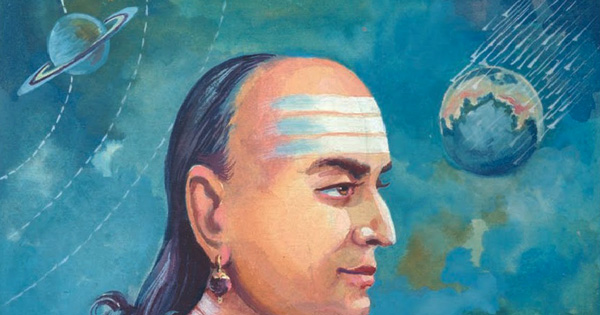
The disquieting question of whether zero is out there or a fiction will call up the perennial puzzle of whether we invent or discover the way of things, hence the yet deeper issue of where we are in the hierarchy. Are we creatures or creators, less than – or only a little less than ― the angels in our power to appraise?
It is a great mistake to think that the motive which leads a man to seek knowledge is always a desire for it. Much more often it is a desire for certainty, and the two are very different things.
We are as much as we see. Faith is sight and knowledge. The hands only serve the eyes.
Every invalid is a physician. What does it matter that his prescriptions are all for himself?
The thing about Cassandra is not that she was disbelieved, but that she was believed and then forgotten — which is the commoner fate of prophets.
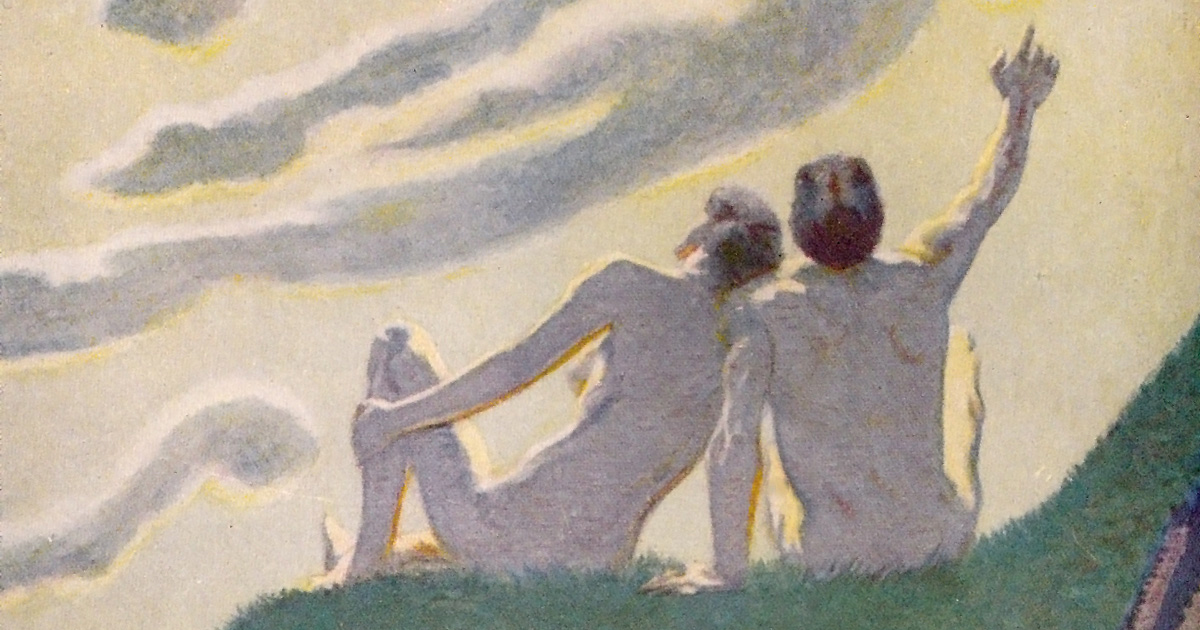
Attention changes the world. How you attend to it changes what it is you find there. What you find then governs the kind of attention you will think it appropriate to pay in the future. And so it is that the world you recognise (which will not be exactly the same as my world) is "firmed up" — and brought into being.
The demand for certainty is one which is natural to man, but is nevertheless an intellectual vice. If you take your hypothesis seriously enough, it will generate predictions; and if the predictions are wrong, you must abandon the hypothesis. To seek for certainty where the subject-matter does not permit it is to mistake the nature of the inquiry.
The most thought-provoking thing in our thought-provoking time is that we are still not thinking. This is a sobering fact when we consider how much has been done, and how little we have understood of what has been done.
The universe is not indifferent to intelligence; it simply has not yet been asked the right questions. But the asking itself changes both the asker and the universe.
The universe is not required to be in perfect harmony with human ambition. And yet the history of science is largely the history of our stubborn insistence that it must be.
A fact is like a sack — it won't stand up till you've put something into it. To make a fact stand up, you have to put into it all the reason and feeling that caused it in the first place.
Actuality is when the lighthouse is dark between flashes: it is the instant between the ticks of the watch: it is a void interval slipping forever through time: the rupture between past and future: the gap at the poles of the revolving magnetic field, infinitesimally small but ultimately real. It is the interchronic pause when nothing is happening. It is the void between events. Yet the instant of actuality is all we ever can know directly.
We are beginning to see that to ask what is the use of science is as vulgar as to ask what is the use of a sunset, and almost as stupid.
The tendency of modern scientific teaching is to neglect the great books, to lay far too much stress on the minute study of details, and to overlook the great generalizations. It is the study of generalizations that liberates the human mind.
The most savage controversies are those about matters as to which there is no good evidence either way. Persecution is used in theology, not in arithmetic, because in arithmetic there is knowledge, but in theology there is only opinion.
The moment we want to believe something, we suddenly see all the arguments for it, and become blind to the arguments against it.
The universe is a series of collapsed probabilities. What we call history is merely the thread that happened to hold — and we mistake the thread for the loom.
The universe is not required to be in perfect harmony with human ambition. It is indifferent to our need for certainty, and it is precisely this indifference that makes the pursuit of understanding so urgent.
The universe is under no obligation to make sense to you.
It is the mark of an educated mind to be able to entertain a thought without accepting it.
It is not the answer that enlightens, but the question. Déceler, c'est créer. To detect is to create.
It is not when truth is dirty, but when it is shallow, that the lover of knowledge is reluctant to wade into its waters.
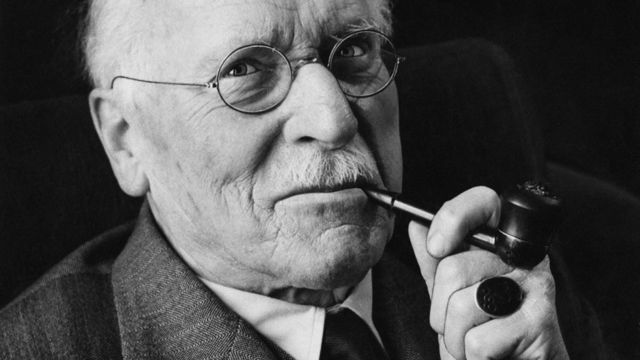
The creative act, which is the absolute antithesis of mere reaction, will forever elude the human understanding. It can only be described in its manifestations; it can be obscurely sensed, but never wholly grasped.
The peculiarity of the evidence of mathematics is that all the argument is on one side. There are no objections, and no answers to objections. But on every subject on which difference of opinion is possible, the truth depends on a balance of two sets of reasons.
The longing to behold this pre-established harmony is the source of the inexhaustible patience with which Spinoza must have waited for years to see his cherished conception of a mathematical proof of the existence of God.
A fact acquires its true and full value only through the idea which is developed from it.
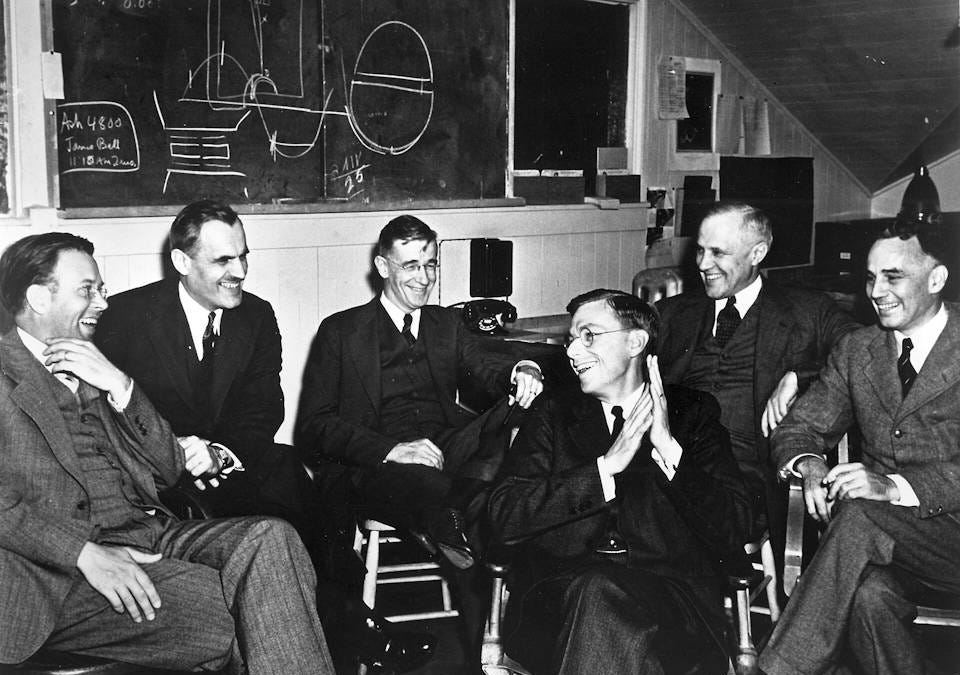
When MAGA types tell you about scientists losing their credibility, or a drop in trust in science, they're only talking about themselves. Whatever left-wing politicization of science happened during the Biden administration — and there was definitely some of that — it was not enough to make most Republicans lose faith in the scientific enterprise, or favor research cuts in order to purge unwanted ideology from the system.
"AI accelerates that production process, makes it slicker and smoother, makes the illusion seem more real," Brown notes. "Makes ever more of it, at greater and greater scale, until you come to believe there is nothing else out there. But it remains a deception. You think you've had your full but all the while you're starving."
It is a truth very certain that, when it is not in our power to determine what is true, we ought to follow what is most probable; and even if we cannot discover which of the alternatives is the more probable, we must nevertheless choose one of them.
We know accurately only when we know little; with knowledge doubt increases.
We are apt to think that our ideas are a measure of things; but they are only a measure of ourselves.
It is not the answer that enlightens, but the question. Decadence begins when questions are suppressed and we are left only with the comfort of old replies.
The historian must not try to know what is truth, if he values his honesty; for, if he cares for his truths, he is certain to falsify his facts.
We are all capable of believing things which we know to be untrue, and then, when we are finally proved wrong, impudently twisting the facts so as to show that we were right. Intellectually, it is possible to carry on this process for an indefinite time: the only check on it is that sooner or later a false belief bumps up against solid reality, usually on a battlefield.
The greatest obstacle to discovery is not ignorance — it is the illusion of knowledge.
The most thought-provoking thing in our thought-provoking time is that we are still not thinking.
The observer, when he seems to himself to be observing a stone, is really, if physics is to be believed, observing the effects of the stone upon himself.
The naturalist hardly expects to be believed when he relates the instincts of animals; yet the physiologist is compelled to believe them, because he cannot explain them away.
The demand of the human intellect is for a world in which something is permanently true. Science gives us a world in which everything is provisionally true — which is not at all the same thing.
We are reluctant to believe that the world we see is not the whole world. Yet the history of knowledge is largely the history of such reluctance being overcome.
We are apt to think that our ideas are the spontaneous product of the mind working upon experience; but in truth our ideas are largely the inheritance of past thought, and the experience upon which they work is itself colored by inherited assumptions.
The truth is that we never know for certain about anything. The degree of assurance we feel about any proposition is not a measure of its truth, but a measure of our familiarity with the evidence bearing on it.
Underscored — save the words that stop you in your tracks.
Start saving quotes →