

Nvidia makes a rather outrageous claim that AI factory compute is becoming an investable asset. It's a $500 Billion third-party financing gig. Nvidia has cash to spare and will backstop up to $125 billion, or 25% of the potential deals.
1mo ago

Brad Jacobs has built eight billion-dollar companies, completed more than 500 acquisitions, and created extraordinary returns for shareholders over four decades. Brad explains how he spots trends before they become obvious, why psychology matters as much as strategy, and how he thinks about acquisitions, hiring, capital allocation, decision-making, and building organizations that consistently outperform.
1mo ago

it was Andy Jassy who explained why their — and Amazon's — capex was justifiable.
1mo ago

He made for them a lot of money absurdly quickly and, on the first drawdown, took the pratfall himself. There's not much new information here. It's just a reminder that when it comes to allocating risk, the best investors are the ones you'll never hear of.
1mo ago
The ability to destroy value is not confined to bad businesses. A great business bought at too high a price, or managed by people who can't resist the temptation to allocate capital to adjacencies, will also destroy value. The label 'great business' is not a perpetual warranty.
1mo ago
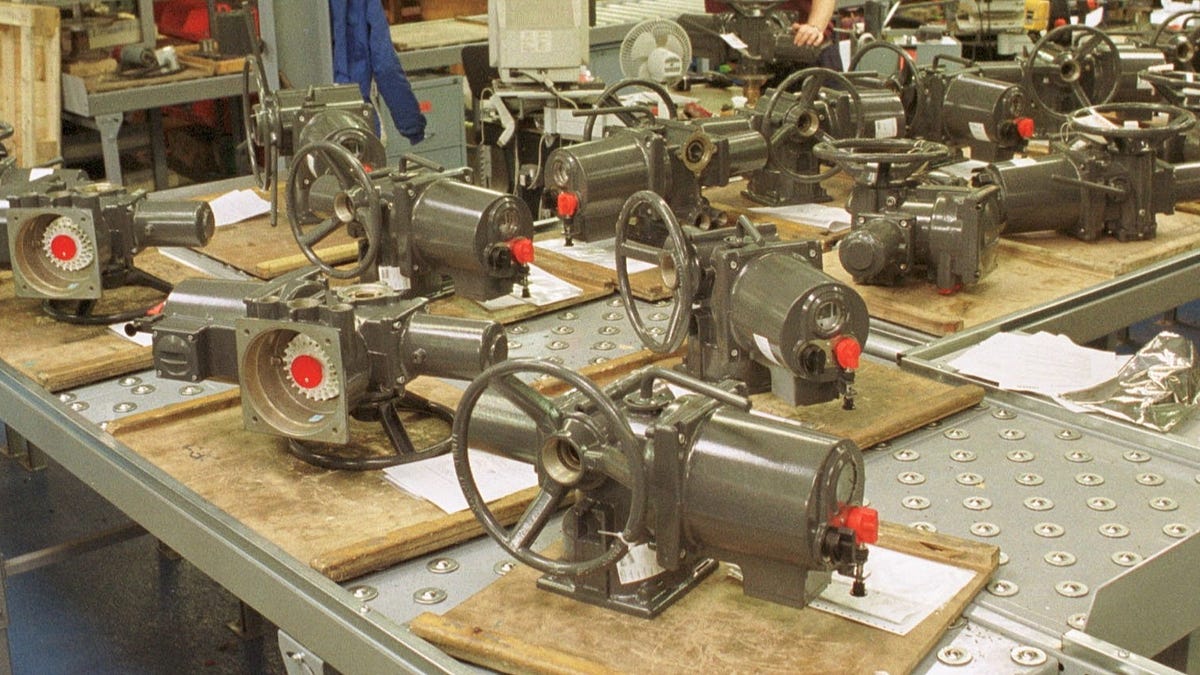
The UK is the world's third-largest destination for private AI capex investment over 2013-25, behind only the US and China, according to Stanford's 2026 AI Index Report. Bank of America makes the argument that the takeover wave is a short-term facet of foreign direct investment that's shifting the UK economy in the longer term "towards higher productivity/capital intensity".
2mo ago
It is not by augmenting the capital of the country, but by rendering a greater part of that capital active and productive than would otherwise be so, that the most judicious operations of banking can increase the industry of the country.
2mo ago
From the perspective of 2026, Generative AI is a springboard to an acceleration of capital moving faster into deep and emerging technologies.
2mo ago

Caballero, Hoshi, and Kashyap argue that evergreening was very bad for the Japanese economy, because it hoovered up scarce resources that better companies could have used to grow. With all of those crappy loans clogging up their books, Japanese banks couldn't lend to healthier companies. With big zombies like Daiei still able to employ large amounts of Japan's best managers, young scrappy upstarts were deprived of talent.
3mo ago
At the very short end [of latency], opportunities have compressed; at the very long end, premia are crowded. Naturally, capital and talent migrate towards the middle.
3mo ago
The best investment is in the business that compounds the fastest while requiring the least capital. Most people think about return on capital. They should think about return on capital per unit of risk taken.
3mo ago
The difference between a good business and a great business is that a good business earns a fair return on capital employed, but a great business earns exceptional returns on capital while reinvesting at those same exceptional rates.
3mo ago
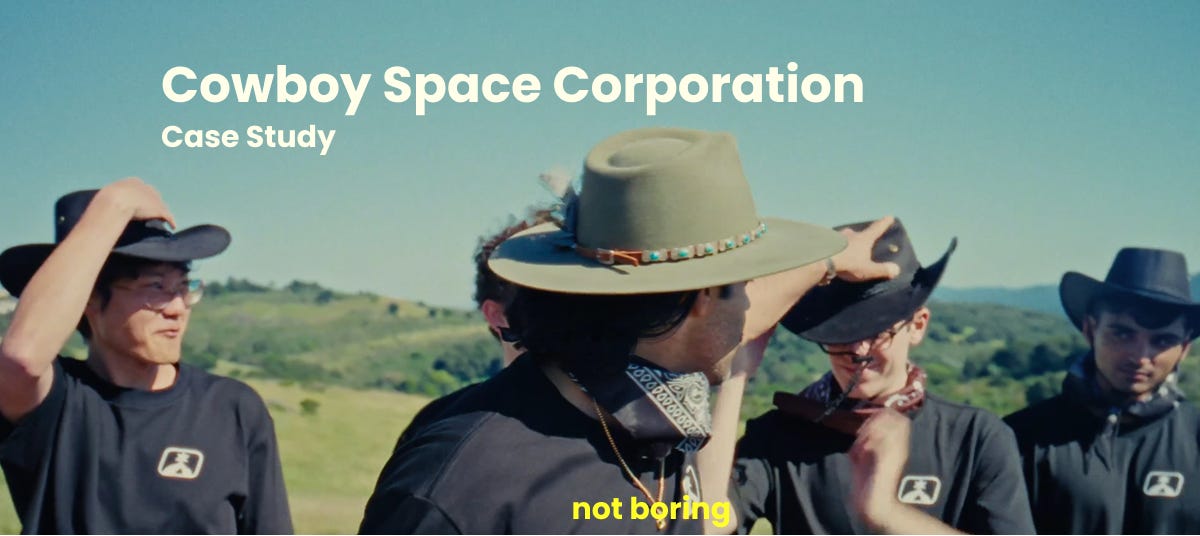
turning Robinhood money into sci-fi energy and compute moonshots is exactly how you should billionaire.
4mo ago
The difference between a great business and a mediocre one is often that the great business keeps compounding capital at high rates of return for decades, while the mediocre business cannot. Most people underestimate how powerful this difference becomes over time.
4mo ago

as four of the five megacaps continue to pour massive sums into AI (first quarter CapEx was more than three times that of the Manhattan Project), there are no signs of that pace slowing.
4mo ago
The best thing a company can do is compound capital efficiently over a long period of time. Everything else is details.
4mo ago
Wall Street loved Google's earnings, and hated Meta's, even though the latter's core business was more impressive.
4mo ago
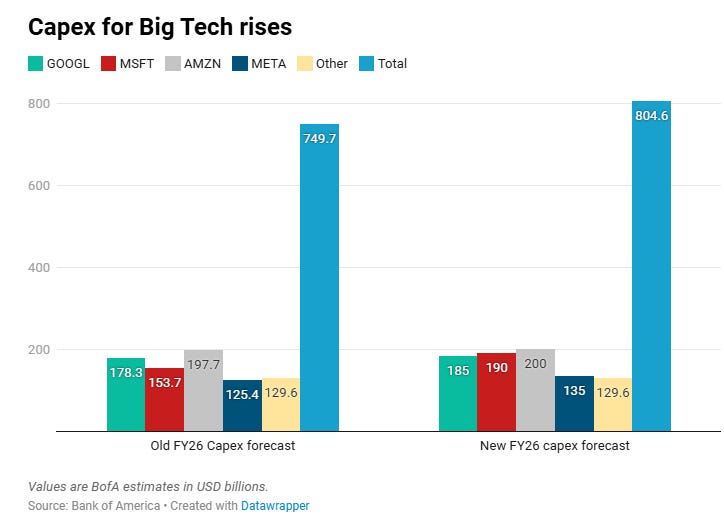
This acceleration of Capex directly correlates with an increased demand for compute in the age of inference. For every meme product like OpenClaw, that's a lot more tokens in the "tokenmaxxing" fad of the Generative AI movement. Large amounts of corporate bonds and Venture Capital funding are essentially subsidizing all of this burning of tokens and heating of GPUs.
4mo ago
The best thing a company can do is compound capital efficiently over a long period of time. That's what creates shareholder value. Most companies don't do it because they're distracted by quarterly earnings, acquisitions that destroy value, or just bad capital allocation decisions.
4mo ago
The best thing a company can do is compound capital efficiently over decades. Everything else is noise.
4mo ago
TSMC's earnings suggest that the company's leadership is not truly bought into the AI growth story.
5mo ago
The best thing a public company can do is nothing. The second best is to buy back stock when it's cheap. The worst is to overpay for acquisitions or go on acquisition binges.
5mo ago
The best way to think about capital allocation is not how much money you make, but how much of what you make you keep. Most people focus on the former and ignore the latter, which is why they stay poor.
5mo ago
The best thing a public company can do with excess cash is repurchase stock when it trades below intrinsic value, but the worst thing is to repurchase stock when it trades above intrinsic value. Most companies do the latter.
5mo ago
The best way to think about capital allocation is not how much money you make, but how much you keep after you've paid taxes, inflation, and the cost of maintaining your standard of living.
5mo ago
The best thing a public company can do is repurchase stock when it's trading below intrinsic value—but the worst thing is to repurchase stock when it's trading above it, which happens far too often because of executive compensation incentives.
6mo ago
The first rule of compounding: Never interrupt it unnecessarily. The second rule of compounding: Never interrupt it unnecessarily.
6mo ago
The best thing a public company can do with cash is buy back stock when it trades below intrinsic value. Everything else is just noise.
6mo ago
The best way to think about capital allocation is not how much money you make, but how much you keep after accounting for the permanent loss of capital. Most investors focus on returns; the best ones obsess over never losing what they've built.
6mo ago
The best way to think about capital allocation is that you're trying to earn the highest return on incremental capital. Most managers think about average returns; the great ones think about marginal returns.
6mo ago
Underscored — save the words that stop you in your tracks.
Start saving quotes →