We are made of starstuff. We are a way for the cosmos to know itself. We have come from the interstellar medium and into the form of conscious beings able to ask the supreme questions.
2w ago

Most objects we transport around the world tolerate their containers. They sit in them, press against them, get held by them. Even the most sensitive cargo, from organs to antiquities, vaccines to wild animals, exist in material continuity with the surrounding world. Antimatter is categorically other. It's not fragile in a way that patience and care can manage simply, because it's constitutively incompatible with everything that exists.
We are made of starstuff. We are a way for the cosmos to know itself. We have come from the interstellar medium and into the form of conscious beings able to ask the supreme questions.

Clearly human science is able to make progress faster than raw experimental falsification/verification would imply, and in cases where experiments are very ambiguous.

But the story of how we discovered the shape of our solar system shows how the verification loop for correct ideas can be decades (or even millennia) long. During this time, what we know today as the better theory can often actually make worse predictions (Copernicus's model of circular orbits around the sun was actually less accurate than Ptolemy's geocentric model).
The eye, like all the other organs, was perfected by natural selection, for good seeing being disadvantageous to every animal, the standard of perfection for this organ is indeterminate.
The atoms of our bodies are traceable to origins in the distant past; they are made of stardust literally.

For every photon absorbed, the system produced 1.3 energy carriers. More out than in, which seems like it shouldn't happen.
The hypothesis that life originates in the inorganic world is the only hypothesis consonant with the present state of scientific knowledge.
The most incomprehensible thing about the world is that it is comprehensible.
The atoms of our bodies are traceable to origins in the distant past; they are made of starstuff which was assembled here, billions of years ago, in the course of the formation of the Earth as a planet. For this reason the constituents of our bodies are literally and intimately connected with the rest of the Universe.
The paradox is only a conflict between reality and your feeling of what reality ought to be.

A policy change announced by NeurIPS, the world's leading AI research conference, drew widespread backlash from Chinese researchers this week and then was quickly reversed.
The atoms of our bodies are traceable to origins in the distant past; they have formed in stars and at the centers of galaxies, and have passed through uncounted transformations. The yesterday of the atom is the history of the universe.

There could be more complex patterns in nature — too complex for a human to hold in their mind, or even notice in the first place, but stable and useful nonetheless. What if there are other complex-but-useful patterns in other domains, like materials science and biology? If they exist, I think AI will be able to find them and apply them.

During this time, what we know today as the better theory can often actually make worse predictions (Copernicus's model of circular orbits around the sun was actually less accurate than Ptolemy's geocentric model). And the reasons it survives this epistemic hell is some mixture of judgment and heuristics that we don't even understand well enough to actually articulate, much less codify into an RL loop.
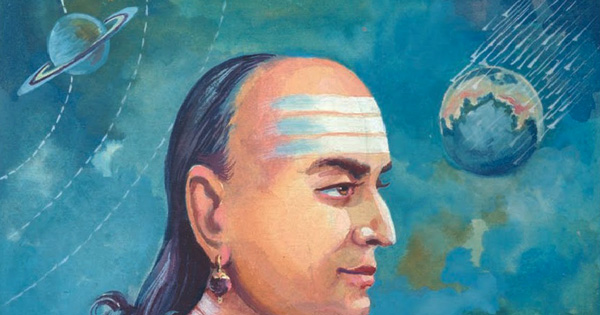
The history of astronomy is a history of receding horizons.
The atoms of our bodies are traceable to origins in the distant past; we are made of stellar material, and the iron in our blood was forged in dying stars.
The discoverer of a new scientific truth does not gradually win over his opponents by converting them... What does happen is that his opponents gradually die, and a new generation grows up that is familiar with the idea from the beginning.
It is the tension between creativity and skepticism that has produced the stunnings achievements of science. The divorce of the two produces politicians without ideas and scientists without conscience.
The great tragedy of science—the slaying of a beautiful hypothesis by an ugly fact.
We are all agreed that your theory is crazy. The question that divides us is whether it is crazy enough to have a chance of being correct.

The jaw has this weird twist that drove us crazy trying to figure it out. We were scratching our heads over this for years, wondering if it was some kind of deformation. But at this point, we've got nine jaws from this animal, and they all have this twist, including the really, really well-preserved ones. So it's not a deformation, it's just the way the animal was made.
We are made of starstuff. We are a way for the cosmos to know itself.
The task is not so much to see what no one has yet seen, but to think what nobody has yet thought about that which everybody sees.
Science is a way of thinking much more than it is a body of knowledge. Its goal is not to arrive at immutable truths but to develop progressively better approximations of reality.
It is the tension between creativity and skepticism that has produced the stunning and unexpected findings of science.
Underscored — save the words that stop you in your tracks.
Start saving quotes →