The trouble with most people is that they think with their hopes or fears or wishes rather than with their minds. The investor's chief problem — and even his worst enemy — is likely to be himself.
1w ago
The biggest investing errors come not from factors that are informational or analytical, but from those that are psychological. Investors with no knowledge of (or interest in) a company's merits buy because the price is rising.
The trouble with most people is that they think with their hopes or fears or wishes rather than with their minds. The investor's chief problem — and even his worst enemy — is likely to be himself.
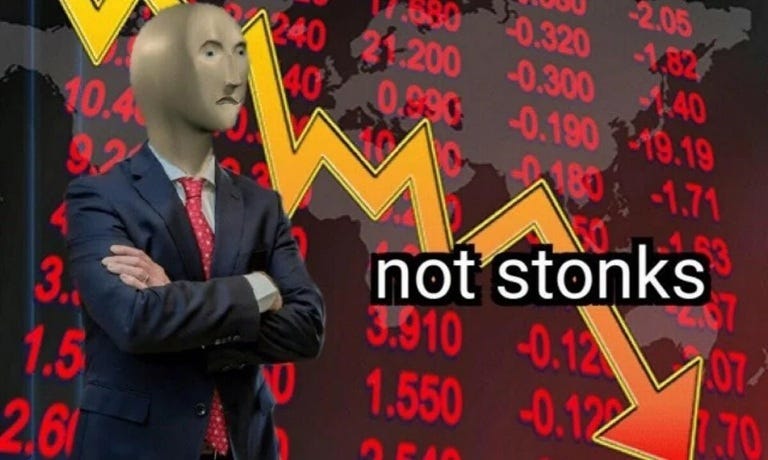
There are probably two stories regarding why this happened — one about fundamentals, and another about finance. In fact, this is typical for bubbles and crashes, not just in stocks but in every asset class. There's almost always some kind of connection to fundamentals — some story about how we're in a new economy, followed by doubts about whether that story is really true, and so on. But the big market movements are almost always accelerated by purely financial factors — "noise traders" armed with piles of excess cash, opportunistic speculators looking to ride the wave of sentiment, and so on.
The market is a device for transferring money from the impatient to the patient. But patience isn't passive — it requires the psychological discipline to do nothing when everything in you screams to act.
The investor's chief problem — and even his worst enemy — is likely to be himself. In the end, how your investments behave is much less important than how you behave.
The ability to sit quietly and patiently while everyone else is acting is not a passive virtue — it is the hardest-won competitive advantage in investing. Most of the damage investors do to themselves comes from the compulsion to do something when the right action is nothing.
The great thing about the public markets is that they give you a daily opportunity to think about what your business is worth. The terrible thing about it is that you can act on it.
The difference between investment success and mediocrity is often not intelligence—it's the ability to do nothing when nothing should be done. Most investors feel compelled to act, when the great fortunes are made by inaction.
Underscored — save the words that stop you in your tracks.
Start saving quotes →