In music, we learn that being in harmony with the world doesn't mean everyone is singing the same note at the same time. It's about embracing the dissonance and following the heart to home. We learn that being in time with the world doesn't have to mean stepping into line.
Daffy was an interesting character, I think, because he would rush in and fear to tread at the same time. And he also could be fawning and overbearing at the same time. And I think that happens with very many of us when we, sometimes in the reverse, when we go in to talk to the boss and ask for a raise, we're overbearing, when we get inside, we're fawning. But Daffy is both at the same time.
I think that I was really ignoring my personal relationship with the cello. I think I was using the cello as a tool, trying to extract all the good that I could from it in a way that would make an impact for other people. But I wasn't really considering what does this sound, what does this practice mean for me?
If you turn to children's fiction, you can, I think, find what endures of us when all our adult compromises and poses are stripped away. You can, I think, find the very meat of the human heart.
I think that I was really ignoring my personal relationship with the cello. I think I was using the cello as a tool, trying to extract all the good that I could from it in a way that would make an impact for other people. But I wasn't really considering, what does this sound, what does this practice mean for me?
Looking back, I think that I was really ignoring my personal relationship with the cello. I think I was using the cello as a tool, trying to extract all the good that I could from it in a way that would make an impact for other people. But I wasn't really considering, what does this sound, what does this practice mean for me?
At the age of 44, 45, when many pop stars are being thrown into the oldies bin, he was still able to create very vital, very new, very important music that was opening up minds and hearts and ears around the world.
Today's models can grind through calculations, combine known techniques, and search enormous spaces, but still struggle with intuition, theory building, identifying the right questions, and developing the kind of big-picture understanding that drives much of mathematical progress.
Imagination is like a muscle. The more you use it, the stronger it becomes. But if you don't use it, it gets weaker and your body will rely on something else to do it for you.
For me, funny and sad go together kind of like chocolate and peanut butter. They enhance one another and for me the saddest books are the ones that have wit and humor because I think through humor you get those flashes of what makes life glorious and mysterious.
I think one of the most difficult things for an independent designer is creating your signature language. Like, what is that signature identity that someone can recognize without even seeing a logo?
I hadn't relied on those comedic chops in a long time. So to lean into that was something that felt new and fresh again for me, especially this late in my career, where the idea of doing a half-hour comedy was a challenge. I wanted to see if I could do it more than anything.
Imagination isn't about escaping the real world. It is a way of building one. And when our imaginations work together, every character on that stage comes alive.
The homework is there to support me, not to decide what it is that I'm going to do. Often when we're acting, we're acting with other people and other factors that we're not aware of when we're doing our rehearsal process. So I like to do the tightrope dance.
right now we find ourselves more people than ever creating. More demand for content than ever, yet less support systems than ever. And there's this very acute pressure that every artist and creative person feels right now of like, I feel like I'm falling behind. I don't even know what to do, you know.
Sometimes nothing is very important. Obviously, nothing's been very important to me. I've written books about it, but in this case, nothing happening is the central feature of symmetry.
So the first band director in middle school made me the drum major, right? So my job was to keep time with my gate, right? Which was a terrible idea, right? So then in high school they moved that to we're going to put the tuba on the field and you'll march in place while everybody else goes in planetary orbit around you.
right now we find ourselves more people than ever creating. More demand for content than ever. Yet less support systems than ever. And there's this very acute pressure that every artist and creative person feels right now. Of like, I feel like I'm falling behind. I don't even know what to do.
What I see is not some momentary blip. But I see the payoffs of investments that were made 70 years ago. We are on a continued climb in this long process of America embracing creative culture as one of its founding core ideals.
We've systematically removed everything that makes play what it is. The spontaneity, the freedom, the wonder, from all parts of adult life and replaced it with efficiency and achievement. And in doing so, we're losing the very survival skills that we need the most right now.
Play is what happens anytime we choose to do something without knowing exactly where it's going to end up. There are no instructions we need to follow or outcomes we need to achieve. Just two elements: intrinsic motivation and the freedom not to know the answer in advance.
Most comedians I know are very serious people. They don't naturally laugh when something's funny, because they're like mad scientists. They almost look at the math of it.
More people than ever creating. More demand for content than ever, yet less support systems than ever. And there's this very acute pressure that every artist and creative person feels right now of like, I feel like I'm falling behind.
Most comedians I know are very serious people. And also, they're also a bit shy. I think my, I would say this, Tina's very shy. I would say Steve Carell's very shy. But they know how to get the thing done.
There is only one moment in every person's life when they have a vibration rate of zero, and that is on their fifth birthday, when they blow out the candle.
Is the problem with New York that every last inch of it has already been chronicled? Have we exhausted all the encounters in parks decked out in golden leaves or swayed in snow? New York has spent decades acting as itself, serving as set and protagonist for love affairs, mysteries, dirty deals, and thwarted dreams.
Is the problem with New York that every last inch of it has already been chronicled? Have we exhausted all the encounters in parks decked out in golden leaves or swayed in snow? film and literature have squeezed New York of all its dues and maybe left it dry.
I'm forced into the choice of having, you know, two actors who can probably half sing or two musicians who can half act. And he says, I'd rather, if it's a musical film, I'd rather have two musicians who can half act. And I'll get a performance out of you. And he says, as long as the music's convincing, I think people are going to believe it.
The American way is that you should always know what you're doing. You've made a decision and you should stick with it. But the fact is that no writer knows what they're doing until they've done it. The way that you get to the miracle of writing is bird by bird.
Adults spend so much time in environments where they're trying to control the outcome that play as a practice becomes about not knowing, not having an attachment to what the outcome is. Side quests release us from worrying about the outcome. Learning begins with inquiry. In fact, the word quest comes from the root question or inquiry.
Because filmmakers were never remembered for their tools -- they were remembered for their stories, for their ability to move audiences, for their vision.
I've got a doctor. His name is Dr. Footlights. Her name. Her name is Dr. Footlights. And when I stand on that stage, and when those lights come up, and when the audience greets me, the pain disappears.
The the joy to me the great pleasure and joy of fashion is that it actually is much more present in our lives than art is. You know, I think to to see art, one has to seek it out. But, you know, when you're walking down the street, you can see so much information and create these beautiful narratives in your mind by seeing what other people are wearing.
Is the oxymoron really "the secret sauce to everything"? That's the case Ingels makes in this debut episode of our new video show Better in Person, filmed in Stephen Dubner's living room.
You can go and recreate Interstellar perfectly, but at the end you just have Interstellar which already exists and is available to stream and so you didn't really get anything in the process. you have to bring something special to the table.
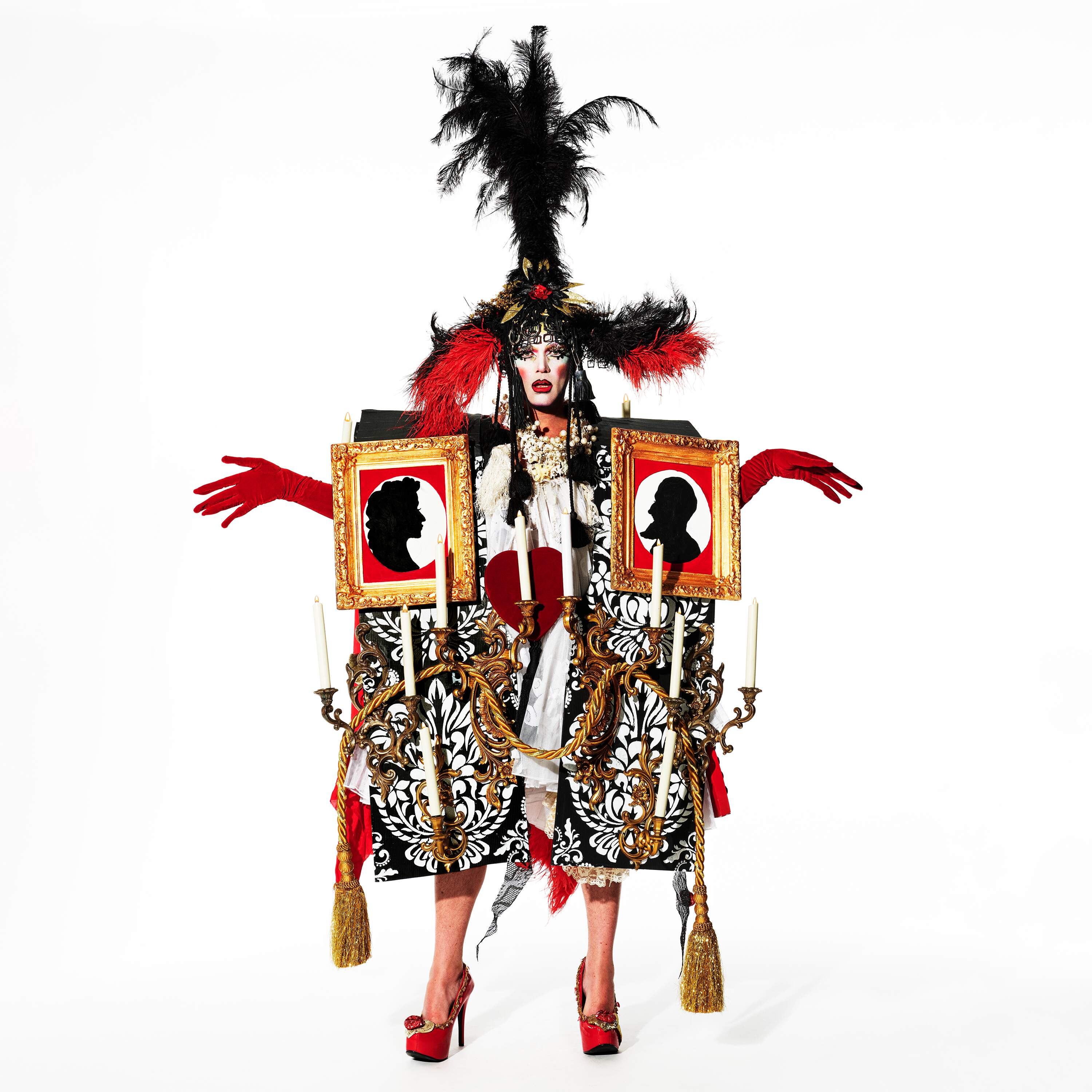
Queer space is about sharing. Yes, we're making space for ourselves, but we're also sharing ourselves and we're inviting people into our circle. We're being generous. Maximalism is generous. It's everything. It's the cake. It's the flour, the eggs, the sugar. It's the oven. It's the heat. It's the love that was put into all of it.
I thought, am I losing my mind or is this one of the best songs I've ever heard in my life? Well, possibly both. But I was thrilled and amazed. And they looked at me for some kind of reaction and I said, I think that's amazing. And perhaps the biggest giveaway is the fact that I immediately asked them if they could play it again. And perhaps the second giveaway is the fact that they were delighted to play it again.
2mo ago
Underscored — save the words that stop you in your tracks.