Disney, due to what I would term as indifference and negligence, wound up kind of winding the site down. Um but now Silver Bulletin is back at Substack, where we do what we probably should have done 16 years ago, and are monetizing it through a subscription model.
And one thing about being a reporter is you're sort of always pulling yourself kind of away from a situation at like a sort of emotional remove when you're reporting on horrific events and I kind of did that with myself too. Sort of like watching myself because it's sort of like my Russian side that's going through this cuz it's all in Russian, you know? I see yeah I see myself on TV but I see Evan. And so it's this sort of like I'm observing him, this guy as much as anybody else is until right before when I find out that I'm going to be swapped.
If you were to look at YouTube as a whole and try to assess what piece of it is dedicated to what you or I would consider high-quality journalism, it's a vanishingly small part of the overall ecosystem there.
There's sort of like this kind of like structural way of doing things and a way of presenting balance and fairness that in fact is not balanced or fair particularly to Palestinians because what is viewed as like sort of a political position is to be like hey maybe you should include a Palestinian or maybe you should include like this perspective
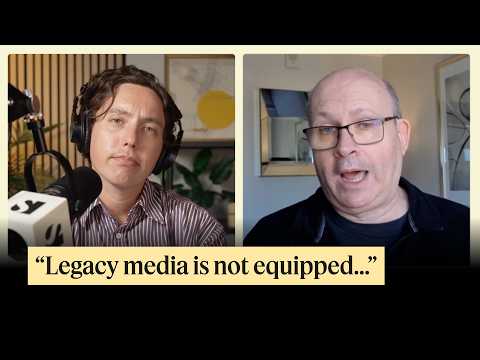
I think the legacy media is not equipped to deal with um uh a politics where just like one side is just like wrong like one side is just like saying things that are preposterously untrue.
It tells the story of Sean Combs across the names he gave himself: Puffy, Puff Daddy, P. Diddy, Love, and the systems that allowed his alleged abuse to go on for decades.
The answer engines are giving the answers and people aren't following the footnotes. You're actually trusting that AI systems are giving you the right answer, and that's destroying media. Across the board, we're seeing reported numbers of between a 90 and 30 percent decline in the traffic to their sites.
In journalism, I have a lot of conviction that great stories aren't going anywhere. The need for high-quality insight isn't going anywhere. Great reporters aren't going anywhere. What surface this all lives on is up for grabs, and you can't be too ideological about that.
The facelift is interesting because the procedure itself is kind of extraordinarily violent. You're severing all these layers of muscle and fat and fascia. Bridget Reid did a piece for New York Magazine where she describes a plastic surgeon lifting the face off of its bones like a Halloween mask and rearranging it. But the results are almost supernatural.
It's my responsibility to be the conduit to bring that message out whether I agree with it or not and let the audience see it. When you can understand where someone's coming from, it definitely develops empathy. You don't have to agree.
It's a place where the financial incentives of the influencer economy crash right into the rigors of traditional journalism — and as regular Decoder listeners know, I have a lot of questions about how those two things work (or don't) in the modern media landscape.
There were so many things I loved about working at the Wall Street Journal and there were so many things that I thought I'm never going to be able to leave this. But then there were so many things that I also saw happening in media, you know, places like you guys uh included that I was jealous of.
We have made a sustained and very deliberate investment over a very long period of time in original independent journalism. That's in journalists, and in the support system structure around them to make sure they can do extraordinary work.
Reporters go out into the world. They bear witness to important things that are happening that the public should know about. And then they translate that with sensitivity and judgment in a way that's meant to get people to understanding.
7mo ago
Underscored — save the words that stop you in your tracks.