underscoredpodcasts

@underscoredpodcasts

39 clips · 1 follower

Follow
Tag:habit-formationClear

Most of us have had the experience of being in a new place and noticing things we'd never seen before — a gorgeous mural on the side of a building, a family of ducks in a pond, the way light filters through leaves. But over time, as a place becomes familiar, we stop seeing it. We go on autopilot. The same thing can happen with people.

Hidden Brain
4h ago

Most of us have been taught to think about luck as something fleeting — a good parking spot, or finding a twenty-dollar bill on the sidewalk. But psychologists who study this topic say that some people are consistently luckier than others, and that luck is less about chance than it is about how you move through the world.

5d ago

Adults spend so much time in environments where they're trying to control the outcome that play as a practice becomes about not knowing, not having an attachment to what the outcome is. Side quests release us from worrying about the outcome. Learning begins with inquiry. In fact, the word quest comes from the root question or inquiry.

5d ago

It made no sense: why couldn't she eat something that she had routinely enjoyed for decades?

1w ago

The truth is that virtue is not different than any other skill. You don't have it or not have it. You do it or you don't do it. And you get better at it the more you do it. This is the fundamental insight of Aristotle, that excellence is not innate. It is a habit.

1w ago

Most of us recognize that we don't always act in our own best interests. We procrastinate. We reach for the candy bar instead of the apple. We say things we later regret. Psychologists have long recognized that our behavior is shaped by mental maps — internal representations of the world that guide our actions, often without our awareness.

2w ago

our brains actually navigate the world by coming up with mental maps. These maps act like an autopilot system, allowing us to navigate our lives more efficiently. But sometimes, they can lead us astray, leaving us stuck on a path of negativity and unhappiness.

2w ago

When we think about making changes in our lives, we typically focus on behaviors. But often, the more powerful lever is the mental map we're using to navigate the world. If the map is wrong, no amount of effort will get us to our destination.

2w ago

When we kind of learn how to check back in with our bodies, right? And we don't have to rely on external cues to do that, right, that behavior is much more likely to stick.

2w ago

When we compare brain activity after movement versus after sitting, the differences are so striking. The brain after movement looks like one certainly far more ready to learn and to work, and yet somewhere along the way, we decided that sitting and staring in front of a computer screen for eight hours straight is the best way to work.

2w ago

These maps act like an autopilot system, allowing us to navigate our lives more efficiently. But sometimes, they can lead us astray, leaving us stuck on a path of negativity and unhappiness.

2w ago

When we compare brain activity after movement versus after sitting, the differences are so striking. The brain after movement looks like one certainly far more ready to learn and to work, and yet somewhere along the way, we decide that sitting and staring in front of a computer screen for eight hours straight is the best way to work.

3w ago

Most of us think of spirituality as something that happens when we have extraordinary experiences — when we see something beautiful, hear a piece of music that moves us to tears, or find ourselves confronted with the vastness of the universe. But Andrew says the research suggests something different: that spiritual experiences are available to all of us, and that we can cultivate them through intentional practice.

3w ago

Stoicism is not something you are, it's something you do, right? It's a practice. John Adams would say that Washington had a great self-command, but that required a great amount of work.

4w ago

The rule of thirds is that when you're chasing a dream or doing anything hard, you're supposed to feel good a third of the time, OK a third of the time and crappy a third of the time. If you're within this ratio, then the bad days aren't bad. They just mean you're chasing a dream.

1mo ago

Most of us think of rituals as ceremonies attached to special occasions. But researchers have found that everyday rituals — the small, patterned behaviors we engage in regularly — can be a source of profound connection. Unlike habits, which we perform mindlessly, rituals are imbued with meaning. They signal to others and ourselves that something matters.

1mo ago

You are never going to be Superman unless you suddenly find a lot of money from somewhere. You are never going to be Batman. But, there's always that chance, isn't there, that you could one day be Captain America.

1mo ago

If your choices are beautiful, then you will be beautiful. We are the product of our choices. Beauty can't be separated from the process, from the regiment that creates it.

1mo ago

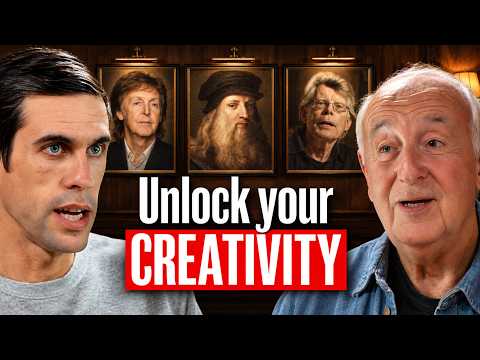
Most people assume that creativity is a fixed trait — you either have it or you don't. But research suggests that creativity is less like a gift and more like a muscle: it can be developed, strengthened, and yes, sometimes exhausted.

1mo ago

Most people think about creativity as a gift — something you either have or you don't. But research suggests that creativity is less like a trait and more like a muscle: it can atrophy if you don't use it, and it can grow stronger with practice.

1mo ago

Most people think that creativity is something you either have or you don't — that it's a fixed trait, like eye color. But researchers who study creativity say this belief is not only wrong, it may actually be preventing people from thinking creatively.

2mo ago

We worry so much about the blank page or the blank canvas. But research suggests that placing too high a premium on originality can actually be a creativity killer. When we feel we have to be original, we become self-conscious, and self-consciousness is the enemy of creativity.

2mo ago

Most people assume that creativity is a trait — you either have it or you don't. But research suggests that creativity is less like a fixed ability and more like a muscle: it can be strengthened with practice, and it can also atrophy when it goes unused.

2mo ago

What if the actual reward is not accomplishment but the act of creating? The finished products and trappings of creative accomplishment are often seen as the goal. But I believe that the act of making is like oxygen. When the making stops, it becomes hard to breathe.

2mo ago

I was drinking a greens powder and looked up in the corner of the room and I was just like, there's no way I'm keeping this habit past 30 days. Um, so that was sort of the epiphany of, hey, how do I take uh something as robust and comprehensive and make it into a form factor that could build a habit for consumer.

3mo ago

How do I take uh something as robust and comprehensive and make it into a form factor that could build a habit for consumer. Make it something they look forward to. They go to bed at night thinking about, excited about taking Gruns the next day.

3mo ago

I think peak subscription refers to subscriptions that don't deliver a lot of value because it's so easy I think to sign up for an app or you know a service and then maybe even forget about it and then six months later you look at say I haven't been using this or I haven't been consuming it.

3mo ago

I can't go on. I'll go on. And I really did not know how I could go from I can't go on to I'll go on. And that's when I started thinking about this idea of devoting myself to everyday joys or like cultivating these tiny victories, like just having a different metric for what would make me happy or also how I could stay engaged in life?

3mo ago

You think you're taking revenge bedtime by staying up and scrolling your phone or watching TV or or even reading, which is isn't is hardly a sin. But by staying up late, you are making it harder to get up early.

4mo ago

You will get knocked off course. You will lapse on a resolution. You will fall off the wagon. You will get out of sorts. That's unavoidable. What matters is how quickly you return, how fast you find the rhythm again.

4mo ago

your 20s sort of dictate your trajectory into your 30s and 40s, and your ability to kind of get to the right positions in your 30s and 40s to really then aggregate influence and economic security are somewhat a function of the trajectory or the scale or the velocity you establish in your 20s.

4mo ago

Underscored — save the words that stop you in your tracks.

Start saving quotes →