
We're getting more and more evidence there might be like no amount of football that is actually safe for people to play.


Emotions are not just feelings — they're a form of information processing. When you feel anxious before a presentation, for example, that anxiety is telling you something about the situation, something you've detected, possibly without being fully conscious of it.
Most of us have been taught to think of emotions as the enemy of good thinking — that to reason well, we need to push our feelings aside and rely on cold, hard logic. But the psychologist Lisa Feldman Barrett says this view is exactly backwards. Emotions, she argues, aren't a distraction from thinking. They're a fundamental part of how we think.

If you look at individuals with depression, many of them don't have decreased serotonin. They have normal levels. This idea that we had a measurable index of depression just because it was less serotonin, many people talked about, but it really wasn't true.
Most people assume that feelings are the enemy of clear thinking — that in order to make good decisions, we need to suppress our emotions and rely on cold logic. But the neuroscientist Antonio Damasio discovered something surprising: people who lose the ability to feel emotions due to brain damage don't become more rational. They become less capable of making good decisions.
We often think of emotions as the enemy of clear thinking — the force that causes us to act impulsively, or to make decisions we later regret. But psychologist Lisa Feldman Barrett says this view is mistaken. Emotions, she argues, are not obstacles to rational thought — they are a necessary ingredient of it.
Most of us think of our feelings as secondary to reasoning — as things that cloud the mind and lead us astray. But research suggests that emotions don't just color our experiences; they actually give us access to information and insights that we would otherwise miss.
Most people think of emotions as the opposite of rational thinking. But the truth is that our feelings are deeply intertwined with our ability to reason — and people who lose access to their emotions due to brain damage often become incapable of making even simple decisions.
Feelings are not the opposite of rational thinking. They are, in many situations, a necessary component of it. People who lose the ability to feel emotions due to brain damage often struggle to make even the simplest decisions.
We tend to think of rationality and emotion as opposites — that feelings cloud our judgment and lead us astray. But the neuroscientist Antonio Damasio found that people who lose the ability to feel emotions due to brain damage also lose the ability to make good decisions.
People often think that emotions are the opposite of careful thinking — that feelings and rationality are at war with each other. But the psychologist Lisa Feldman Barrett says this view is completely wrong. Our feelings, she argues, are not obstacles to good thinking, but essential ingredients of it.
People assume that emotions get in the way of good thinking. But the neuroscientist Antonio Damasio found that patients with damage to the emotional centers of the brain didn't become more rational — they became worse at making decisions. Without feelings to guide them, they got lost in endless deliberation, unable to choose between options.
Most of us think of emotions as the enemy of clear thinking — as biases that lead us astray. But researcher Lisa Feldman Barrett says this view has it exactly backwards. Feelings, she argues, aren't obstacles to good reasoning; they're essential ingredients of it.
We often think of feelings as the enemy of clear thinking — as forces that muddy the waters of rational analysis. But emotions, it turns out, are not the opposite of thought. They are a form of thought.
We often think of emotions as the enemy of rational thought. But the neuroscientist Antonio Damasio found that people who had damage to the emotional centers of their brains didn't become better decision-makers — they became worse ones, unable to make even simple choices about what to eat for lunch or when to schedule an appointment.
Emotions are not the enemy of rational thinking. They are, in fact, essential to it. People who lose the ability to feel emotions due to brain damage often become terrible decision-makers, even when their logical reasoning remains intact.
Most people assume that feelings get in the way of clear thinking — that the ideal decision-maker is a kind of emotion-free calculator. But neuroscientist Antonio Damasio discovered something remarkable: patients who lost the ability to feel emotions due to brain damage also lost the ability to make good decisions, even when their reasoning abilities remained intact.
Most of us have been taught to think of emotions as noise in the system — interference that distorts the signal of pure reason. But what if we've had it exactly backwards? What if emotions aren't obstacles to good thinking, but essential ingredients of it?
We tend to think that the best decisions are made when we're calm and dispassionate — when we manage to push aside our feelings and focus on the facts. But neuroscientist Antonio Damasio discovered something remarkable: people who lose the ability to feel emotions due to brain damage also lose the ability to make good decisions.
Pain is not just a physical sensation — it's also an experience shaped by our expectations, beliefs, and emotions. When people expect to feel pain, they often feel more of it. And when they believe they're being helped, even a sugar pill can ease their suffering.
Pain is not just a signal of damage — it is also a prediction. The brain is constantly trying to figure out what is happening in the body, and sometimes it gets it wrong, generating pain even when there is no ongoing tissue damage.
Pain is not just a sensation in the body — it's an experience that is profoundly shaped by the brain. The same injury can produce very different levels of pain in different people, and even in the same person at different times.
Pain is a lot like an alarm system. It's designed to get your attention, to make you do something. And if the alarm never turns off, that's exhausting — it wears you down. But here's the key insight: the alarm isn't the injury. The alarm is your brain's interpretation of signals from your body, and that interpretation can change.
Most of us have encountered the idea of the bell curve. Average is the most common outcome. Very good or very bad outcomes are rarer. Extremely good or extremely bad outcomes are rarest of all. But Yadin Dudai says our emotional memories don't follow a bell curve — instead, they skew toward the extremes.
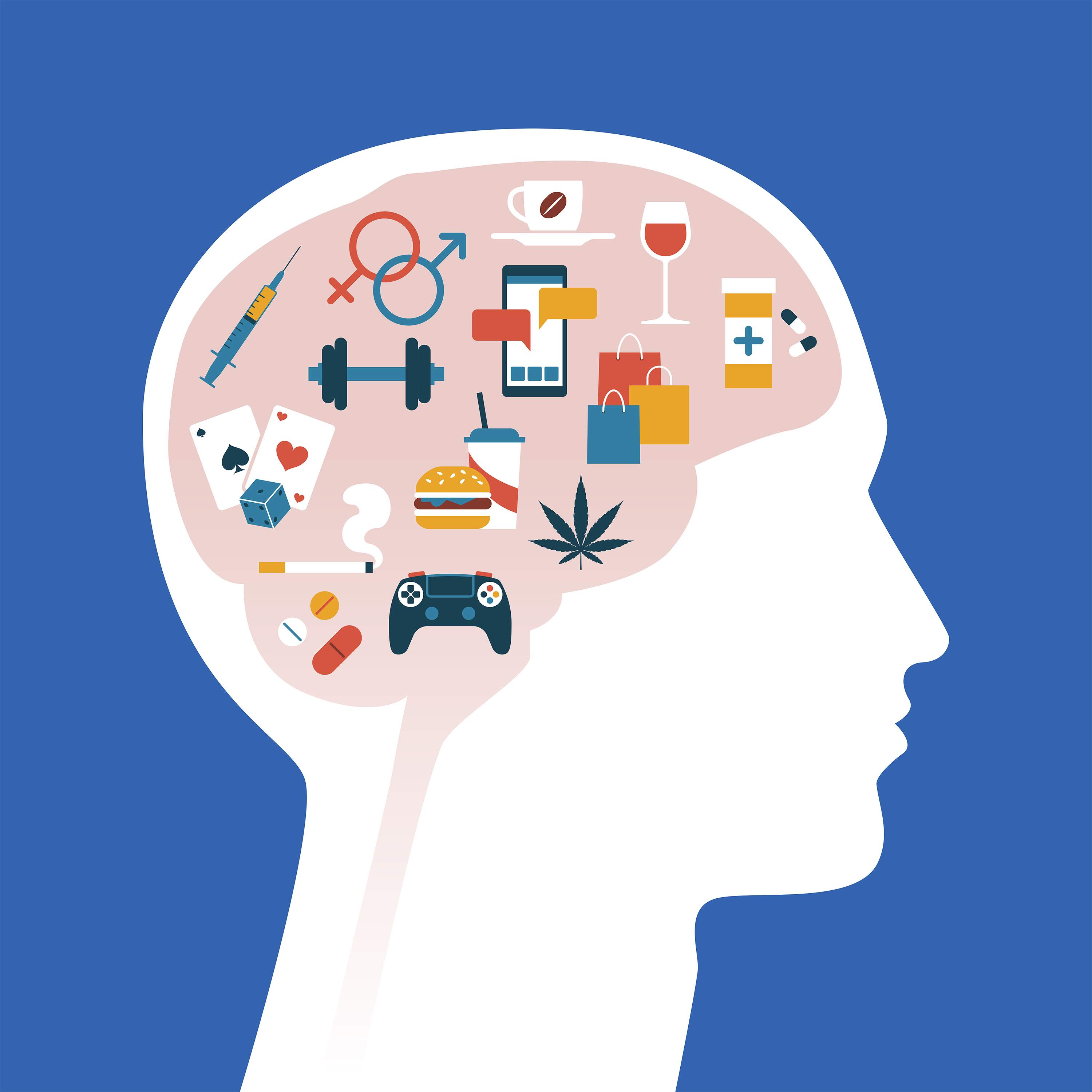
GLP-1s might be telling us that there's some type of universal pathology when it comes to addiction, and that they are part of how we fix it. Now that is a tantalizing prospect, that there's a general purpose key that unlocks the path to moderation. But that's what GLP-1s seem like they could be, moderation molecules. They don't extinguish our desires, but they help us keep them in check.
Pain is not just a sensation; it's also an emotion. And when you're in pain, your whole life can narrow down to that pain. It can make it harder to think, harder to connect with others, harder to find joy in activities that once brought pleasure.
Most people think of pain as a signal from the body — a warning that something is wrong. But Yoni Ashar and his colleagues found that for many people with chronic back pain, the signal had become decoupled from any actual tissue damage. The brain had learned to generate pain on its own, independent of what was happening in the body.
Pain is not just a physical sensation — it's also a psychological experience. And that means the brain can sometimes be recruited to fight pain itself. Researchers have found that when people feel cared for or loved, when they feel a sense of meaning or purpose, or when they have a strong sense of control over their lives, they actually feel less pain.
Pain researchers have found that the experience of pain is heavily shaped by context, expectation, and meaning. The same injury can feel devastating in one situation and barely noticeable in another — soldiers wounded in battle, for instance, often report feeling little pain at the moment of injury, because the wound means they will be evacuated from the front lines.
Pain depends not just on the signals traveling from the body to the brain, but also on what the brain expects to feel. When the brain anticipates pain, it can amplify those signals — and when it doesn't, the very same injury can feel far less intense.
When pain signals travel to the brain, the brain doesn't just passively receive that information — it actively decides how much attention to pay to it. This means that pain is not simply a readout of damage in the body; it's a construction of the mind.
It made no sense: why couldn't she eat something that she had routinely enjoyed for decades?
Pain is not just a physical sensation but an emotion, something produced by the brain in response to a complex set of inputs. And because pain is constructed by the brain, our mental states can shape and even control how much pain we experience.
Pain is not just a signal from the body — it's an experience constructed by the brain. And that means our thoughts, emotions, and expectations can powerfully shape how much pain we feel. In some cases, simply understanding that pain is not always a reliable indicator of tissue damage can itself reduce suffering.
The problem is that we think of pain as something that just happens to us — a signal from the body that something is wrong. But the truth is more interesting. The brain is constantly making predictions about what it expects to feel, and those predictions shape what we actually experience.
Physicians themselves have had to grapple with the nature of pain. For much of medical history, pain was seen as a symptom — a signal from the body that something had gone wrong. But researchers have come to see that pain is more than a warning system. It is, in some ways, a construction of the mind.
When you feel pain, a signal travels from the injured part of your body up through your nervous system. But the brain decides how much attention to pay to that signal. If the brain is occupied elsewhere — by a competing task or distraction — it can turn down the volume on pain.
Pain is not just a signal from damaged tissue — it's also a prediction. The brain is constantly trying to anticipate what's going to happen next, and pain is part of that predictive process. This means that pain can exist even in the absence of injury, and injury can exist without pain.
Pain is not just a sensation — it's an experience. And that experience is profoundly shaped by what we believe about our pain, what we think is causing it, and how we feel about it emotionally.
Pain is not just a physical sensation — it's also a psychological experience. And that means that the way we think about pain, the way we attend to it, the way we catastrophize about it or don't, can have a huge effect on how much we suffer.
Pain feels like a simple message from the body. If your elbow hurts, there must be something wrong with your elbow. If your back is painfully stiff, you need some work done on your back. But psychologist Rachel Zoffness says our minds play a much larger role in our experience of pain than many of us realize.
Doctors typically treat pain with medications that target the body. But what if we thought about pain the way we think about mental illness, as something that arises in the mind and the body at the same time? Research suggests that simply believing your treatment will help can actually change how much pain you experience — and this effect is not imaginary.
Most of us assume that our perception of the world is accurate — that we see things as they really are. But our brains are not cameras. They are prediction machines, constantly generating models of reality based on past experience, and then updating those models when new information arrives.
our brains actually navigate the world by coming up with mental maps. These maps act like an autopilot system, allowing us to navigate our lives more efficiently. But sometimes, they can lead us astray, leaving us stuck on a path of negativity and unhappiness.

When we compare brain activity after movement versus after sitting, the differences are so striking. The brain after movement looks like one certainly far more ready to learn and to work, and yet somewhere along the way, we decided that sitting and staring in front of a computer screen for eight hours straight is the best way to work.

Why does she get them in so many different situations? What's happening in her body and what does it mean? We take that question and run with it — we face chilly winds, sudden frights, and moments when the world seem to shift under your feet to figure out what the little bumps on our skin might be trying to tell us.
When we compare brain activity after movement versus after sitting, the differences are so striking. The brain after movement looks like one certainly far more ready to learn and to work, and yet somewhere along the way, we decide that sitting and staring in front of a computer screen for eight hours straight is the best way to work.

People who have more spiritual experiences — that sense of oneness, of feeling connected to something larger than themselves — tend to have a thicker cortex in certain brain regions. And this is true even after you control for whether someone goes to church or synagogue or mosque, or whether they believe in God.
People who have frequent spiritual experiences also tend to be healthier and happier. They show lower rates of depression and anxiety, less substance abuse, and they even tend to live longer. And it's not just that healthy, happy people have more time to go to church or temple — the spiritual experiences themselves seem to be driving these positive outcomes.
Underscored — save the words that stop you in your tracks.
Start saving quotes →