And so these two very smart real estate guys, not knowing the history, not knowing the complexities, they can parachute in and they can make peace because they're smart and they're quick and they're not burdened by all the baggage of the past.
You can be 22 years old, not graduate from college, go into the Navy, enlist in the Navy, not even in the officer training program, and in 18 months you can be responsible for the security of a nuclear power plant on a submar. Your pdoom on nuclear is completely irrelevant to you doing this job, right?
obeying bad incentives--shading a headline for clicks, keeping the found wallet because no one's watching--is "loser behavior," a surrender of the hardest and most human task: figuring out right from wrong for yourself.
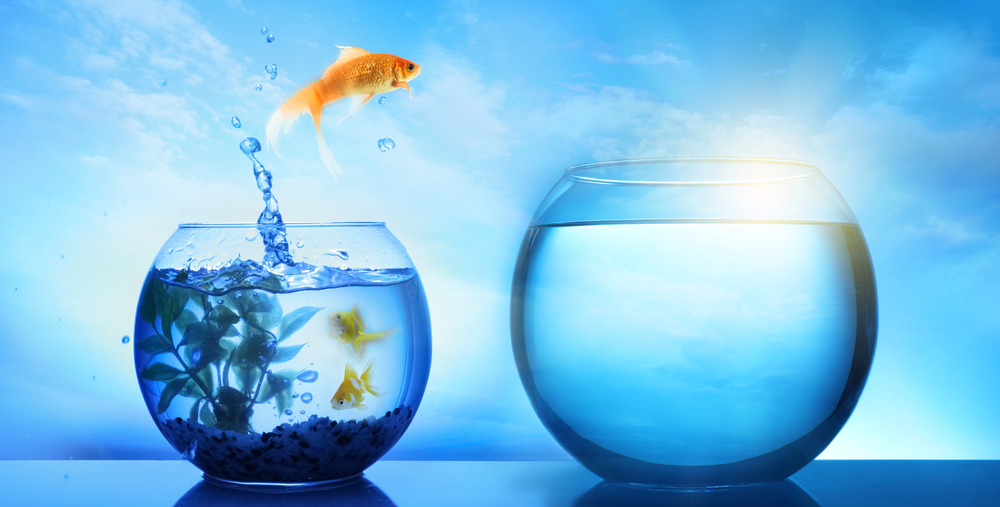
Most of us are familiar with the pull of a fresh start. But researcher Kristina Olson has found something surprising: people who make dramatic life changes — who blow up their lives — often report higher levels of well-being than those who stay the course, even when the change involves significant loss and hardship.
When we blow up our lives, we often tell ourselves we're seeking freedom or authenticity. But research suggests we may simply be running from discomfort — and that the new life we're chasing will eventually produce the same discomfort we were trying to escape.
Taking action, even though you don't have a real grounded expectation of being successful, I think there's still value in the action to watch and witness and be able to say that you saw what was there.
Every fiber in my being was screaming at me to get out of this building. Every second that we wasted was one second closer to us not getting out of the building. But that's not what firemen do. We were there to save people's lives. And that culture, that firefighter culture, overtook whatever personal need I felt to get out of the building.
Most people, when they feel the itch to blow up their lives, assume the discomfort is a signal that something is deeply wrong — that they need radical change. But sometimes the urge to flee is not a sign that your life needs to change; it's a sign that you need to change how you're living your life.
Their story contains an entire universe of questions about the lines between life and death, reflex and will, and the confusing tug of war between two basic moral touchstones: doing no harm...and doing everything in our power to help.
I say to people sometimes the biggest mistake that most people make in their career is never making a big mistake because they never take a chance. Um and if you just wait for sure things you basically never do anything. You don't ever make any big mistakes but you never do anything big.
We think that making a big change will make us happy, but what we're really doing is escaping the discomfort of our current situation. And the new situation will eventually have its own discomforts, which we'll want to escape from as well.
The reason I don't want to be a judge is a principal judge stays out of politics and stays out of policy fights. And if I were a judge, I'd do that. I'd stay out of those fights. I don't want to stay out of those fights.
People who blow up their lives often aren't doing something irrational — they're responding to a deep psychological need that their current life isn't meeting. The problem is that blowing up your life is a very blunt instrument for addressing that need.
People who blow up their lives often don't realize that the discomfort they feel isn't a sign that something is wrong with their life — it's a sign that something is wrong with them. And if you blow up your life without addressing that underlying problem, you're going to find yourself in the same situation a few years later.
Psychologist Anthony Klotz studies the "jolts" that shake us out of our routines, and how these moments can help us make more intentional decisions about the people we want to become.
A consecutive series of great actions never is the result of chance and luck; it always is a product of planning and genius. Is it because they are lucky that [great men] become great? No, but being great, they have been able to master luck. What is luck? The ability to exploit accidents: The vulgar would call this luck, but in fact it is the characteristic of genius.
To the curious incident of the dog in the nighttime... the dog did nothing in the nighttime. That was the curious incident, remarked Sherlock Holmes. Sometimes nothing is very important.
I think that we don't see these things as being purposeful, modifiable, rooted in things like sexism and racism in some cases. And so, yeah, the time tax, what is it taking from you to get that thing?
At the center is Sarah's conviction that no single company will own the future of AI, and what that means for founders, investors, and anyone allocating their time and resources in a world moving this fast.
If we wait for the financing, sometimes the timing of a project just doesn't ever materialize. And I watched so many things, great ideas die on the vine and I didn't really want that to keep happening.
The best companies we've invested in, the founders had a point of view about the world that was different from consensus, and they were right. And the hardest part of venture is that you can have a non-consensus view and be wrong, or you can have a consensus view and be right, but only the non-consensus and right leads to the outlier returns.
The climate impacts scale with the the the temperature rise we experience, which kind of means there's no point at which we should just give up, right? Because the hazards at 1.7 are better than they are at two. And if we go past two, then it's worth trying to stay below 2.3 rather than 2.5.
Do I know for sure, for sure, if we should do it? No, but I do know we can't keep talking about it. We're either never going to do it, or we're going to become two Tony Randles who feed our baby applesauce that we also eat.
Most of us think we know what our partners want and need. But Epley's research suggests that we're often wrong — and that the solution isn't to try harder to read our partner's mind, but to simply ask.
Emotions are not just feelings — they're a form of information processing. When you feel anxious before a presentation, for example, that anxiety is telling you something about the situation, something you've detected, possibly without being fully conscious of it.
Most of us have been taught to think of emotions as the enemy of good thinking — that to reason well, we need to push our feelings aside and rely on cold, hard logic. But the psychologist Lisa Feldman Barrett says this view is exactly backwards. Emotions, she argues, aren't a distraction from thinking. They're a fundamental part of how we think.
Most people assume that feelings are the enemy of clear thinking — that in order to make good decisions, we need to suppress our emotions and rely on cold logic. But the neuroscientist Antonio Damasio discovered something surprising: people who lose the ability to feel emotions due to brain damage don't become more rational. They become less capable of making good decisions.
We often think of emotions as the enemy of clear thinking — the force that causes us to act impulsively, or to make decisions we later regret. But psychologist Lisa Feldman Barrett says this view is mistaken. Emotions, she argues, are not obstacles to rational thought — they are a necessary ingredient of it.
Most of us think of our feelings as secondary to reasoning — as things that cloud the mind and lead us astray. But research suggests that emotions don't just color our experiences; they actually give us access to information and insights that we would otherwise miss.
Most people think of emotions as the opposite of rational thinking. But the truth is that our feelings are deeply intertwined with our ability to reason — and people who lose access to their emotions due to brain damage often become incapable of making even simple decisions.
Feelings are not the opposite of rational thinking. They are, in many situations, a necessary component of it. People who lose the ability to feel emotions due to brain damage often struggle to make even the simplest decisions.
We tend to think of rationality and emotion as opposites — that feelings cloud our judgment and lead us astray. But the neuroscientist Antonio Damasio found that people who lose the ability to feel emotions due to brain damage also lose the ability to make good decisions.
People often think that emotions are the opposite of careful thinking — that feelings and rationality are at war with each other. But the psychologist Lisa Feldman Barrett says this view is completely wrong. Our feelings, she argues, are not obstacles to good thinking, but essential ingredients of it.
Emotions, he came to realize, aren't the enemy of rational thought. They are part of rational thought. Emotions are an evolved system of wisdom — a shorthand that allows us to make quick decisions based on a wealth of past experience.
People assume that emotions get in the way of good thinking. But the neuroscientist Antonio Damasio found that patients with damage to the emotional centers of the brain didn't become more rational — they became worse at making decisions. Without feelings to guide them, they got lost in endless deliberation, unable to choose between options.
Most of us think of emotions as the enemy of clear thinking — as biases that lead us astray. But researcher Lisa Feldman Barrett says this view has it exactly backwards. Feelings, she argues, aren't obstacles to good reasoning; they're essential ingredients of it.
We often think of feelings as the enemy of clear thinking — as forces that muddy the waters of rational analysis. But emotions, it turns out, are not the opposite of thought. They are a form of thought.
Emotions are not just feelings — they're a form of information. When you have a feeling, you're actually getting a signal about what's relevant, what's important, and what you might be missing. Suppressing that information comes at a cognitive cost.
We often think of emotions as the enemy of rational thought. But the neuroscientist Antonio Damasio found that people who had damage to the emotional centers of their brains didn't become better decision-makers — they became worse ones, unable to make even simple choices about what to eat for lunch or when to schedule an appointment.
Emotions are not the enemy of rational thinking. They are, in fact, essential to it. People who lose the ability to feel emotions due to brain damage often become terrible decision-makers, even when their logical reasoning remains intact.
Most people assume that feelings get in the way of clear thinking — that the ideal decision-maker is a kind of emotion-free calculator. But neuroscientist Antonio Damasio discovered something remarkable: patients who lost the ability to feel emotions due to brain damage also lost the ability to make good decisions, even when their reasoning abilities remained intact.
Most of us have been taught to think of emotions as noise in the system — interference that distorts the signal of pure reason. But what if we've had it exactly backwards? What if emotions aren't obstacles to good thinking, but essential ingredients of it?
We tend to think that the best decisions are made when we're calm and dispassionate — when we manage to push aside our feelings and focus on the facts. But neuroscientist Antonio Damasio discovered something remarkable: people who lose the ability to feel emotions due to brain damage also lose the ability to make good decisions.
Emotions are not just feelings — they're information. They tell you what you care about, what matters to you, what you should attend to in the environment. If you strip away your emotions, you don't become a better reasoner; you become a worse one.
1mo ago
Underscored — save the words that stop you in your tracks.