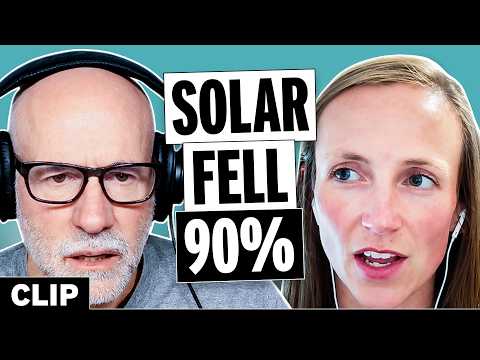
AI's capex boom is the second largest share of use GDP in history. bigger than the railroads, second only to the I think the Louisiana purchase... unlike past tech booms, Facebook, Instagram, Door Dash, it's fundamentally a supply side story about making chips, building data centers, and powering them. It's money creating demand for energy, not the reverse.
the two physical constraints that in Gavin's view will dictate the next phase of AI. On power, he thinks the near-term shortage starts to ease in 2027 and 2028 as new sources of energy come online, and that orbital compute solves it in the long term. On wafers, he explains what is different this time from the dotcom bubble and why TSMC's capacity decisions may be the single most important variable to watch.
With the US more than 50 years behind China in critical mineral supply and grid infrastructure built on systems designed a century ago, they examine where the real bottlenecks are and how to move faster.
Energy is upstream of everything and more importantly food the the fertilizer production coming out of that region. Um and it's planting season so it's a very bad timing for the world's agricultural supply chains.
As the battlefield becomes more distributed and electronics-heavy, the Army's legacy power infrastructure, built around diesel generators and lead-acid batteries, is struggling to keep up.
roughly 20% of the world's oil production is flowing through that every day and so whether you're looking backward or looking forward there is no replacement whatsoever for opening that strait and keeping it open.
I really do feel that I have more energy. I had a lot of energy at 37. I had a lot of energy at 17. I have more energy at 67 when I wrote that, 68 now. I need less sleep. My clarity, if anything, I think is higher.
3mo ago
Underscored — save the words that stop you in your tracks.